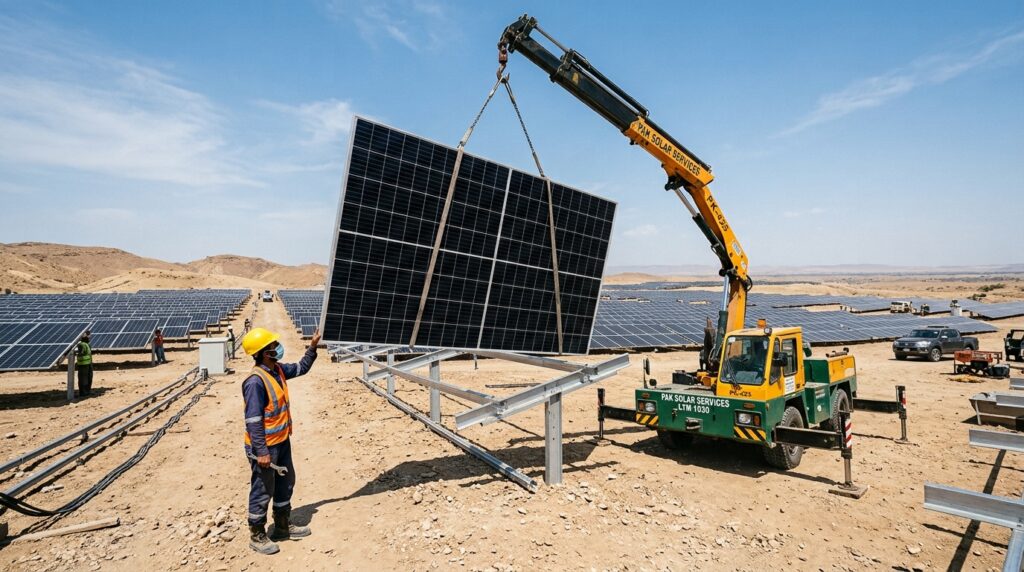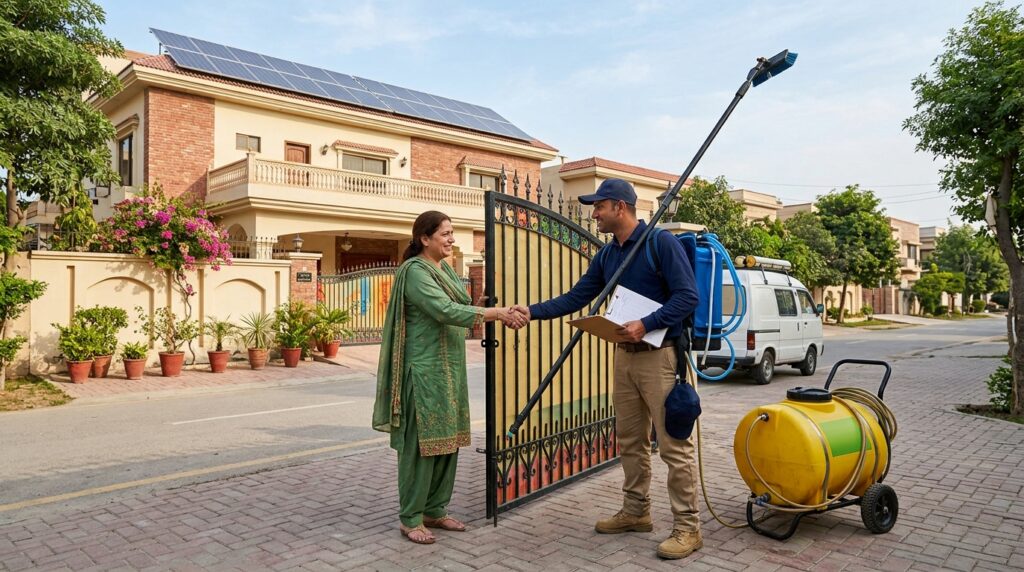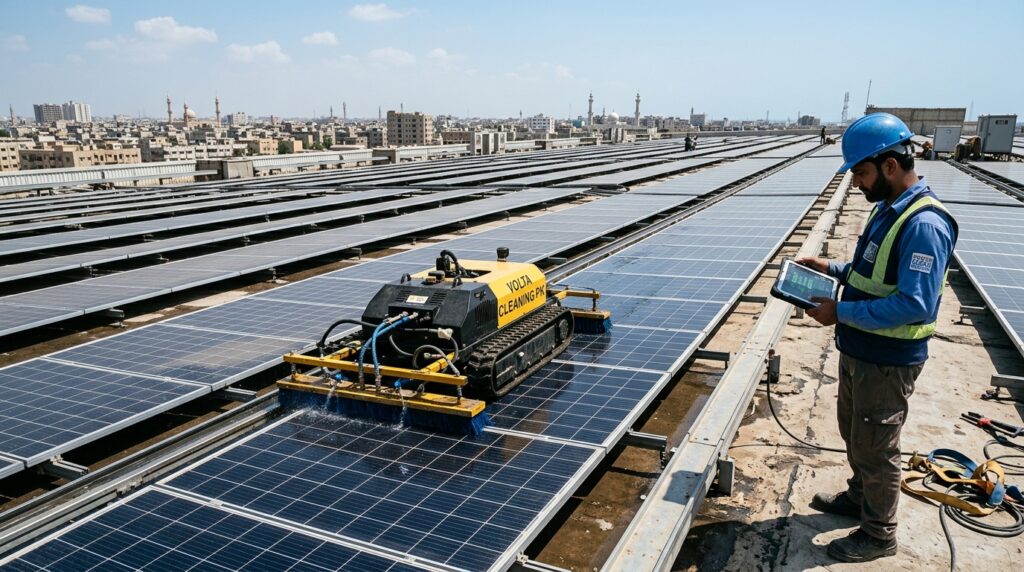
Summers in Pakistan are brutal. Temperatures in cities like Multan, Jacobabad, and Hyderabad regularly exceed forty-five degrees Celsius, making air conditioning not a luxury but a survival necessity. At the same time, the electricity bills generated by running air conditioners during peak summer months have become unaffordable for millions of Pakistani households. The combination of high electricity tariffs and frequent load shedding has driven a surge of interest in solar panels for AC units.
The good news is that solar power and air conditioning are a natural match in Pakistan. The hottest months, when AC usage is highest, are also the months when solar irradiance is at its peak, meaning your solar panels are generating the most electricity exactly when you need it most. At Pakistan Solar Solutions, we have helped hundreds of Pakistani families and businesses design solar systems specifically for running air conditioners, and the results in terms of bill reduction have been extraordinary.

Before sizing your solar panel system for AC use, you must understand how much power your air conditioner actually consumes. Air conditioners in Pakistan are rated in tons, with one ton, one and a half ton, and two ton being the most common residential sizes. However, the relevant figure for solar sizing is wattage.
A typical one ton non-inverter air conditioner consumes approximately one thousand to one thousand two hundred watts when running. A one and a half ton unit consumes around one thousand four hundred to one thousand six hundred watts. A two ton unit draws approximately two thousand watts. Inverter air conditioners are significantly more efficient and their consumption varies based on the temperature difference between indoors and outdoors. A one ton DC inverter AC can operate at as little as three hundred watts under ideal conditions and ramp up to nine hundred to one thousand watts at full load.
The startup current surge is also important. When an AC compressor starts, it draws three to five times its running wattage for a brief moment. Your solar inverter must be able to handle this surge without tripping. This is why a properly sized hybrid solar inverter, which you can explore in our hybrid solar inverter guide at Pakistan Solar Solutions, is essential for AC-powered solar systems.
The number of solar panels for AC units depends on the AC size, panel wattage, and how many hours you want to run the AC. A common question from Pakistani customers is how many panels they need to run a one ton inverter AC for eight hours daily.
A one ton inverter AC consuming an average of seven hundred watts over eight hours uses five thousand six hundred watt-hours, or five point six kilowatt-hours, per day. A standard four hundred watt solar panel in Pakistan generates between one thousand four hundred and one thousand eight hundred watt-hours per day, depending on location and season. To generate five point six kilowatt-hours daily, you would need approximately four to five four-hundred-watt panels dedicated to AC operation.
However, your solar system also needs to power your other home appliances such as fans, lights, refrigerator, and television. A complete household system typically requires eight to twelve solar panels of four hundred watts each to run all appliances including one or two AC units. For a two-AC household, a ten to fifteen kilowatt system is often recommended.
Not every solar inverter is capable of handling the startup surge and continuous load of an air conditioner. When installing solar panels for AC units, choosing the right inverter is as important as choosing the panels themselves.
A hybrid solar inverter with adequate continuous power rating and at least double the rated power as peak surge capacity is the recommended choice for AC-running solar systems in Pakistan. For example, to safely run a one point five ton inverter AC, a five kilowatt hybrid inverter is the minimum recommended size, even though the AC’s average consumption is lower than five kilowatts. The extra capacity handles the startup surge and leaves room for other appliances to run simultaneously.
Single-phase hybrid inverters are suitable for most residential setups with up to two AC units. For larger homes or commercial buildings with multiple AC units, three-phase hybrid inverters are available and offer better load balancing and efficiency.
At Pakistan Solar Solutions, we help you match the right inverter capacity to your AC load, ensuring your system runs reliably without constant tripping or component stress.
One of the most common questions about solar panels for AC units is whether batteries are required. The answer depends on when you want to run the AC.
If you primarily want to run your AC during daytime hours when the sun is shining and solar panels are generating electricity, you can do so with an on-grid or grid-tie system without batteries. The solar panels directly power the AC during the day, and you draw from the grid when panels are not generating enough.
However, for evening and nighttime AC use, which is when most Pakistani families most want to run their AC, batteries are essential. A hybrid solar inverter paired with a lithium-ion battery bank of ten to twenty kilowatt-hours of storage can power one or two AC units through most or all of the night. The batteries charge during the day when solar panels are generating excess electricity and discharge in the evening to run the AC.
Given Pakistan’s load shedding schedule, which often falls in the evening hours, battery backup for AC operation is not just a comfort upgrade but a genuine necessity for many households.
When running solar panels for AC units in Pakistan, DC inverter air conditioners are strongly preferred over non-inverter models. The reasons are significant.
DC inverter ACs adjust their compressor speed based on the cooling demand, consuming far less electricity than non-inverter models that run at full power or not at all. Over a full day of operation, a DC inverter AC can consume forty to sixty percent less electricity than a non-inverter AC of the same capacity. For a solar system, this means fewer panels, smaller batteries, and a smaller inverter are needed, reducing the total system cost significantly.
Additionally, DC inverter ACs have a softer startup that generates a lower surge current, which is gentler on your solar inverter and battery system. This extends the lifespan of all components in your solar setup.
If you are purchasing a new AC alongside your solar system, always choose a five-star rated DC inverter model from a reputable brand. The higher upfront cost of an inverter AC is recovered within one to two summers through electricity savings, and it works far more efficiently with your solar energy system.
The placement and tilt angle of solar panels significantly affects how much electricity they generate, which in turn affects how well your AC runs during peak summer heat. In Pakistan, solar panels should ideally face south and be tilted at an angle equal to your latitude, approximately twenty-five to thirty-five degrees depending on your city.
During summer, when the sun is higher in the sky, a slightly flatter tilt angle of fifteen to twenty degrees can capture more energy. Some households install adjustable mounting structures that allow them to change the tilt seasonally for maximum output. Clean panels, as covered in our solar panel cleaning brush guide at Pakistan Solar Solutions, also generate significantly more power and help your AC run longer on solar electricity.
To understand the financial benefit of solar panels for AC units, consider a typical Pakistani household in Lahore running a one point five ton inverter AC for eight hours daily during summer. At a per-unit electricity rate of sixty to seventy rupees, this AC consumes approximately ten to twelve units daily, costing six hundred to eight hundred and forty rupees per day, or eighteen thousand to twenty-five thousand rupees per month, on electricity bills alone.
A solar system sized to cover this AC load, including panels, hybrid inverter, and a modest battery bank, might cost three hundred thousand to five hundred thousand rupees installed. At a monthly saving of twenty thousand rupees on the AC electricity bill alone, the payback period is fifteen to twenty-five months. After payback, the system continues generating free electricity for another twenty to twenty-five years.
For a full cost breakdown and customised proposal for your AC solar setup, visit Pakistan Solar Solutions and connect with our team.
Pakistani solar system owners who install systems sized for AC operation often generate surplus electricity during months when the AC is not running. Through net metering, this surplus is exported to the grid and credited against future bills. A household with a ten kilowatt solar system might generate thirty to forty kilowatt-hours daily in winter, far more than needed for heating, fans, and lighting. This excess is credited against the summer months when AC usage drives higher consumption.
Effectively, net metering allows you to bank summer-ready solar credits during winter, further reducing the effective cost of running your AC on solar power throughout the year.
Can a three kilowatt solar system run a one ton AC in Pakistan? A three kilowatt system can run a one ton DC inverter AC along with basic household loads during daytime, but it may not be sufficient if you also want to run other appliances simultaneously or use battery storage for nighttime operation. A five kilowatt system is more appropriate for a complete setup.
Will running AC shorten the lifespan of my solar inverter? No, provided the inverter is correctly sized for the AC load. Running an adequately sized hybrid inverter at normal load does not shorten its lifespan. Overloading a small inverter with a large AC unit, however, can cause overheating and early failure.
How many hours can I run my AC on batteries at night? With a ten kilowatt-hour lithium battery bank fully charged, you can typically run a one ton inverter AC for eight to ten hours at night, depending on the outdoor temperature and the AC’s efficiency settings.
Is it better to buy a solar AC or a regular AC for my solar system? Regular DC inverter ACs from established brands like Dawlance, Gree, Haier, or Midea are perfectly compatible with solar systems and are widely available and serviced in Pakistan. Solar-specific ACs exist but offer limited additional benefit for most installations.
Can I start installing solar panels for AC use if I already have an existing solar system? Yes, existing solar systems can often be expanded by adding more panels, upgrading the inverter, or adding battery storage to accommodate AC loads. Pakistan Solar Solutions can assess your current setup and recommend the most cost-effective expansion path.