In Pakistan, solar plates, which is the common local term for solar panels, are one of the most significant investments a household or business can make. A properly maintained solar system can generate clean electricity for twenty-five years or more. However, one of the most basic and most neglected aspects of solar maintenance is regular solar plate cleaning. In Pakistan’s harsh climate, dirty solar plates are one of the leading causes of underperforming solar systems, and the solution is simpler than most people realize.
At Pakistan Solar Solutions, we consistently find that customers who clean their solar plates regularly see ten to thirty percent higher electricity generation compared to those who do not clean at all. This guide explains why solar plate cleaning matters, how to do it correctly, what products and tools to use, and how to build a cleaning schedule that suits your location in Pakistan.

The photovoltaic glass surface of a solar plate is designed to capture maximum sunlight. Unfortunately, this same exposed surface is constantly subject to environmental contamination. In Pakistan, several specific factors make solar plate cleaning more urgent than in many other countries.
Airborne dust is the primary culprit. Pakistan ranks among the top ten countries in the world for particulate air pollution, with major cities like Lahore regularly recording dangerously high PM2.5 and PM10 levels. This pollution settles continuously on solar plates, forming a dull grey layer that scatters and absorbs incoming sunlight before it can reach the photovoltaic cells underneath.
Seasonal challenges compound the problem further. During spring and early summer, dust storms from Balochistan and the Thar Desert carry enormous quantities of fine sand particles that coat rooftop solar plates in a matter of hours. During the smog season in November and December, a combination of agricultural stubble burning and vehicle emissions creates a sticky, oily film on solar plates that is much harder to remove than dry dust. Bird droppings, which are highly acidic and can etch the glass surface if left for extended periods, are another common cause of solar plate contamination in both urban and rural areas.
The business case for regular solar plate cleaning is straightforward and significant. Research conducted on solar installations in South Asian climates similar to Pakistan’s has consistently shown that dust accumulation of just one millimeter on a solar plate surface can reduce its output by up to twenty percent. In severe cases, with heavy dust or bird droppings covering a significant portion of the panel surface, losses of forty to fifty percent are possible.
To put this in practical terms for a Pakistani household: a ten kilowatt solar system that generates forty units of electricity per day under clean conditions might produce only twenty-five to thirty units per day if neglected for a month. At sixty rupees per unit, this represents a daily loss of six hundred to nine hundred rupees, or eighteen thousand to twenty-seven thousand rupees per month in lost electricity production.
Regular solar plate cleaning, which costs almost nothing if done yourself with basic equipment, prevents this loss entirely. If you have invested in quality equipment available at Pakistan Solar Solutions, protecting that investment with regular cleaning is the logical next step.
There are several methods for solar plate cleaning, ranging from simple dry brushing to automated robotic systems. The right method for you depends on your system size, roof access, water availability, and budget.
Dry brushing is the simplest method and is suitable for light dust removal. Using a soft-bristled solar panel cleaning brush with an extendable handle, you simply brush away loose dust from the plate surface. This method is quick and requires no water, making it ideal for a quick clean after a dust storm. However, it is not effective for removing stuck-on dirt, bird droppings, or the oily film from smog. For a detailed look at the right tools for this method, see our solar panel cleaning brush guide at Pakistan Solar Solutions.
Water washing is the most effective method for thorough solar plate cleaning. It involves rinsing the plate surface with clean water while simultaneously scrubbing with a soft brush. The water lifts and flushes away both loose and stuck-on dirt without scratching the surface. This method is recommended for monthly deep cleaning.
The water-fed brush method combines washing and scrubbing in a single step. A long-handled brush with water flowing through the handle and out through the bristles allows you to clean rooftop solar plates from the ground or from a safe standing position without needing to climb onto the roof. This is the preferred method for most Pakistani homeowners for both safety and convenience.
Water alone is usually sufficient for routine solar plate cleaning. However, in cases of heavy soiling from bird droppings, industrial deposits, or the sticky smog film common in Lahore and Karachi, a mild cleaning solution can be helpful.
Suitable cleaning solutions include mild dish soap diluted in water at a ratio of one teaspoon per litre, isopropyl alcohol diluted with water for removing oily deposits, and commercially available solar panel cleaning solutions that are formulated to be safe for photovoltaic glass and anti-reflective coatings.
Never use bleach, ammonia, vinegar at full concentration, or abrasive cleaning powders on solar plates. These can dissolve the anti-reflective coating, permanently reducing light transmission and energy output. Also avoid hard water without treatment, as dissolved minerals leave white calcium deposits on the glass that are difficult to remove and can reduce panel efficiency over time. If your area has hard water, use a water softening filter attachment with your cleaning hose.
The ideal cleaning frequency depends entirely on your local environmental conditions. Here is a general framework for different regions of Pakistan.
For Lahore, Faisalabad, and the central Punjab plain, which experience heavy smog in winter and dust storms in summer, cleaning every ten to fourteen days during the smog season and every two weeks in summer is recommended. Monthly cleaning may be sufficient during the monsoon months of July and August when rain naturally washes the plates.
For Karachi and the coastal cities, sea salt deposits add to the dust challenge, making bi-weekly cleaning advisable throughout the year. Salt residue is particularly damaging to solar plate frames and junction box seals, so a thorough rinse with fresh water is important even on weeks when you do not do a full scrub.
For Islamabad and the Potohar plateau, relatively cleaner air means monthly cleaning is usually adequate, increasing to bi-weekly during spring when winds carry dust from the surrounding plains. For rural areas in Sindh and Balochistan, where dust storms are more frequent and intense, weekly cleaning may be necessary during the dry season.
Monitoring your solar system’s output through your hybrid inverter’s app is the most reliable way to determine when your plates need cleaning. A drop in output compared to your system’s historical baseline for the same weather conditions is a clear signal that solar plate cleaning is overdue. To learn more about hybrid inverters with output monitoring features, visit Pakistan Solar Solutions.
A thorough solar plate cleaning session should follow a clear process to be both effective and safe.
Begin by checking the time of day. Clean solar plates either in the early morning before ten AM or in the late evening after four PM during summer. Midday cleaning on hot plates risks thermal shock when cold water hits the heated glass. Early morning is ideal because dew on the plate surface helps loosen dust and reduces the amount of scrubbing needed.
Switch off your solar system at the inverter before starting to clean. While solar plates themselves do not pose an electrical hazard when wetted, switching off the system is a standard safety precaution recommended by most manufacturers.
Start with a dry brush pass to remove loose dust from the surface. Then apply water generously using a hose or water-fed brush and begin scrubbing gently with your solar plate cleaning brush, working from the top of each panel downward. Pay special attention to the edges and lower corners where dust and debris accumulate.
Rinse thoroughly with clean water to remove all loosened dirt and any soap residue. Check the plate surface from an angle to see if any streaks or spots remain. If necessary, do a second rinse. Allow the plates to air dry naturally, which happens quickly in Pakistan’s warm weather.
After cleaning, reconnect your system and monitor the output for the next few hours through your inverter app. You should see a noticeable improvement in generation compared to the pre-cleaning baseline.
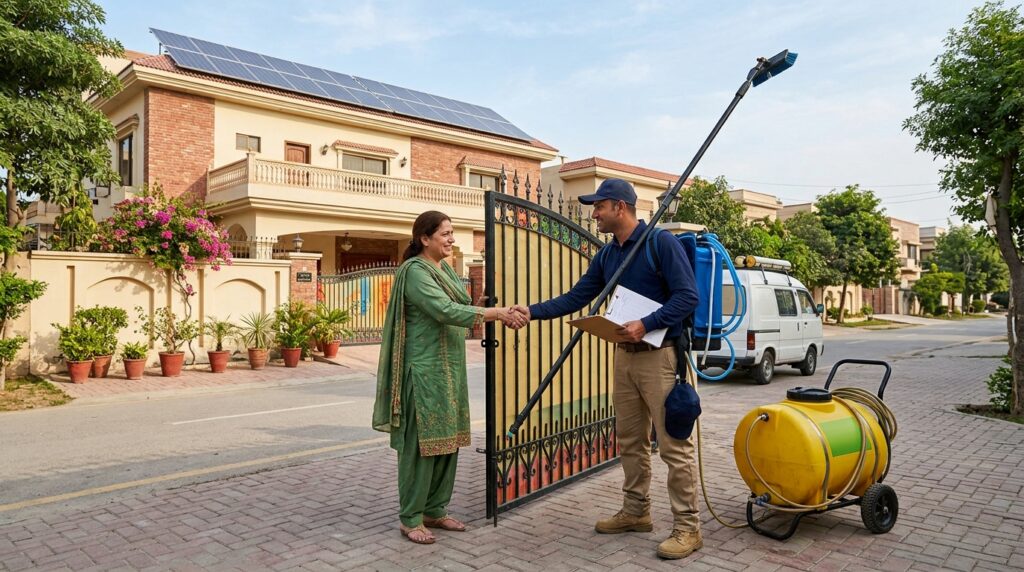
For large commercial solar installations or rooftop systems that are difficult or unsafe to access, professional solar plate cleaning services are available in all major Pakistani cities including Karachi, Lahore, Islamabad, Peshawar, and Quetta. Professional cleaners use commercial-grade equipment including water-fed brush systems, purified water, and safety harnesses for high-access installations.
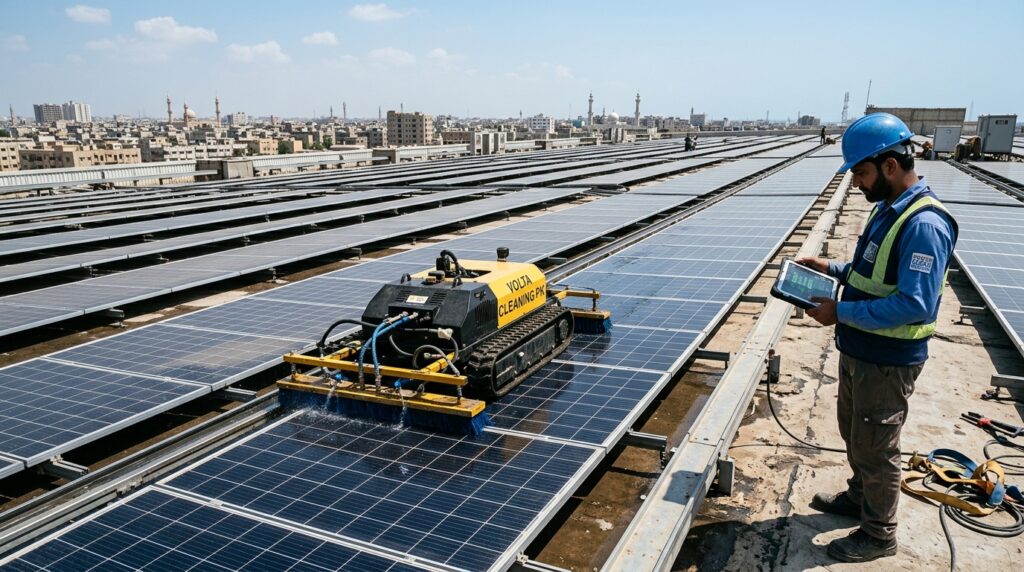
The cost of professional solar plate cleaning varies based on system size and location, but for most residential systems it ranges from two thousand to eight thousand rupees per session. Given the electricity losses caused by dirty plates, professional cleaning pays for itself many times over in restored energy production. Some commercial solar farms have begun using automated robotic solar plate cleaning systems that clean panels nightly without human intervention, representing the cutting edge of maintenance technology for large-scale solar investments.
Does rain clean solar plates automatically in Pakistan? Light rain can wash away loose dust, but it often leaves muddy residue at the panel edges as it dries. Heavy rain does a better job, but the irregular rainfall pattern in most of Pakistan, especially during the long dry winters, means you cannot rely on rain alone. Manual solar plate cleaning remains essential.
Can I use a pressure washer to clean my solar plates? Pressure washers are not recommended for solar plate cleaning. High-pressure water can force water into junction boxes, damage seals, and in some cases crack the glass or loosen the panel frames. Gentle low-pressure rinsing with a regular hose or water-fed brush is safer and equally effective.
How do I clean bird droppings off solar plates without scratching them? Soak the dropping with water for a few minutes to soften it before attempting to remove it. Then gently wipe with a damp soft cloth or sponge. Never scrape hardened droppings with a hard tool as this will scratch the glass. If the area is stubborn, a diluted mild soap solution applied for a few minutes before rinsing usually works effectively.
Will cleaning solar plates void my panel warranty? No, regular cleaning does not void solar panel warranties. In fact, most manufacturers require documented maintenance, including regular cleaning, as a condition of their warranty. Using inappropriate tools or chemicals is what can void warranties, which is why using the correct solar panel cleaning brush matters.
How much electricity output can I recover by cleaning dirty solar plates? The recovery depends on how dirty the plates were before cleaning. In Pakistan’s dusty climate, plates that have not been cleaned for one to two months typically recover ten to thirty percent of lost output after a thorough clean. In extreme cases, plates coated with thick dust or smog can recover up to fifty percent of their production capacity after proper solar plate cleaning.