

The 300 watt solar panel occupies a familiar, well-established spot in Pakistan’s solar market, sitting just above the 280 watt category covered in our earlier guide and representing one of the most commonly stocked mid-range panel sizes among local dealers and installers. For buyers building a small backup system, powering a shop, or supplementing an existing inverter setup, the 300 watt solar panel price in Pakistan remains one of the most frequently asked pricing questions in this segment. This guide breaks down current 2026 rates, what a 300 watt panel can realistically power, and how it compares to the nearby wattage options you are likely also considering.
Panels in the 300 watt range represent a natural middle ground between smaller backup-focused panels, such as the 150 watt panels covered in our dedicated guide to 150 watt solar panel options, and the larger 550 watt and above panels standard in modern full rooftop residential systems, discussed in our solar panel 550 watt price in Pakistan guide. This positioning makes 300 watt panels a common choice for buyers who need more capacity than a purely small backup setup provides, but who are not yet ready to commit to a full-scale net metering system, or who are specifically expanding an existing smaller solar setup incrementally rather than starting from scratch.
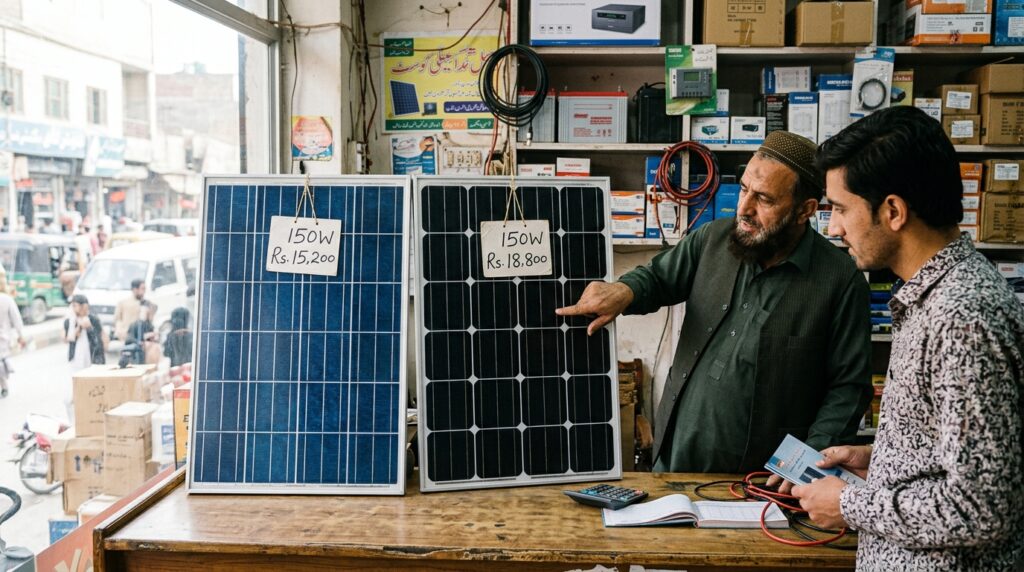
As of 2026, a single 300 watt solar panel in Pakistan typically costs between PKR 13,000 and PKR 18,000, depending on whether it is polycrystalline or monocrystalline, and which manufacturer produced it. This places 300 watt panels only modestly above the pricing for 280 watt panels covered in our 280 watt solar panel price in Pakistan guide, reflecting the relatively small jump in physical size and material cost between these two closely spaced wattage options.
Polycrystalline 300 watt panels remain available at the lower end of this price range, generally appealing to buyers prioritizing upfront cost over marginal efficiency gains. Monocrystalline 300 watt panels, while somewhat more expensive, deliver meaningfully better efficiency and a more compact physical footprint for the same rated output, an important consideration for buyers with limited roof or mounting space, a topic covered in greater depth in our guide to high efficiency solar panels.
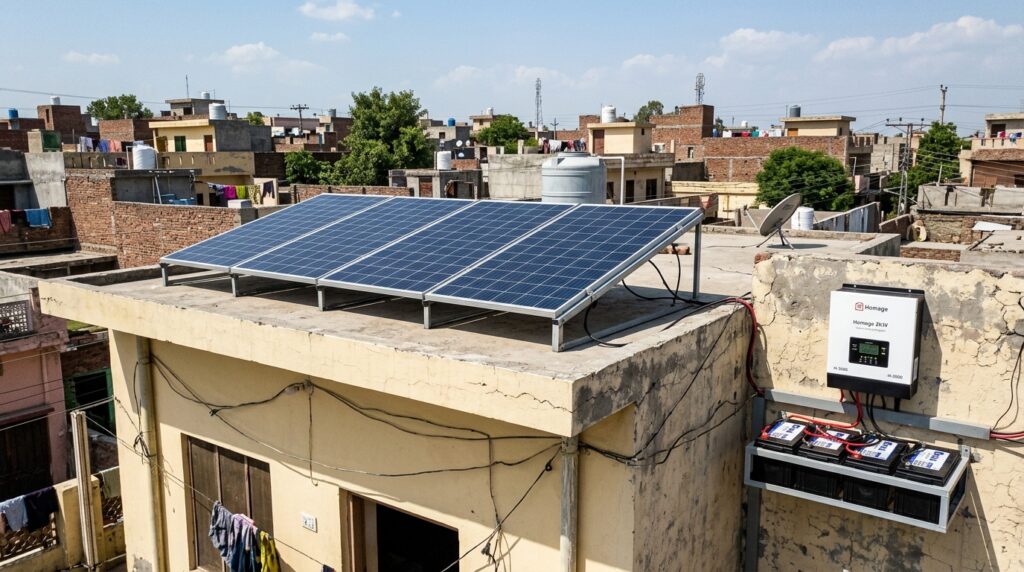
Most buyers interested in 300 watt panels are planning a system using several units together rather than a single standalone panel. A setup using four panels, totaling 1,200 watts, typically costs between PKR 52,000 and PKR 72,000 for the panels alone, before adding the inverter, battery and mounting structure. This configuration is popular for small shops, home offices, and households wanting a meaningful backup solution without the cost and complexity of a full residential net metering system.
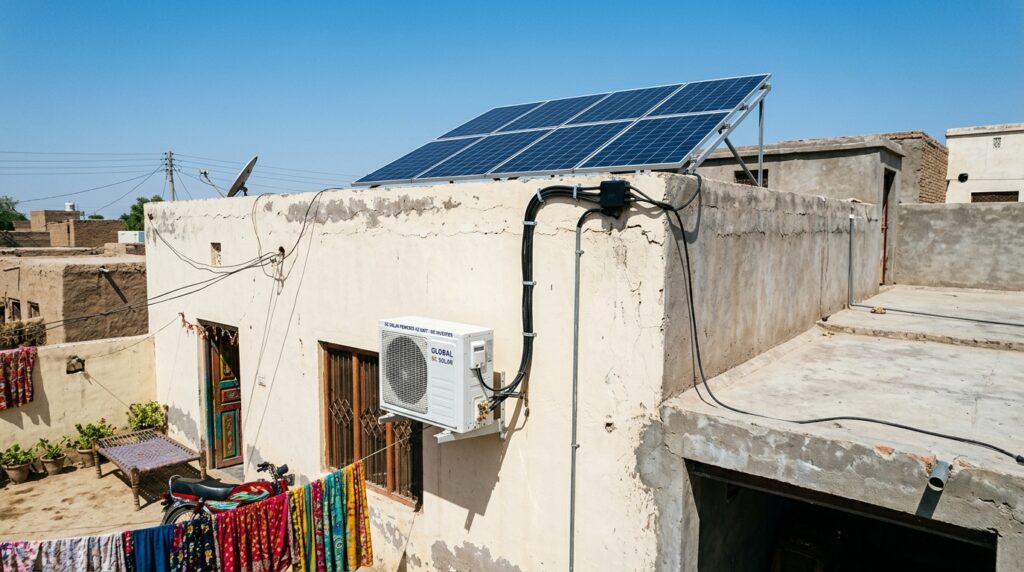
A single 300 watt panel under good sunlight conditions with five to six peak sun hours generates roughly 1.2 to 1.5 kilowatt-hours of usable energy daily, before accounting for losses in the inverter, charge controller and battery. This is sufficient to comfortably run a few LED bulbs, a fan, and charge multiple devices throughout the day, with a multi-panel setup of three to four units scaling this up to support a small refrigerator, additional lighting circuits, and basic electronics for several hours during load shedding, a use case similar to what we describe for the 280 watt solar panel category, though with slightly more total capacity per panel.
Buyers comparing 300 watt panels against nearby wattage options often find the price difference between these closely spaced sizes to be relatively modest, typically just a few thousand rupees per panel between 280, 300 and 330 watt options. Since the per-watt cost generally improves slightly as wattage increases within this range, buyers not constrained by a very tight budget or extremely limited mounting space often find that stepping up to 330 watt panels, where available, delivers a marginally better cost per watt while requiring the same or fewer total panels to reach a given system size. For buyers specifically comparing 300 watt against the smaller 280 watt option covered in our dedicated guide, the decision often comes down to what is readily available and competitively priced from a trusted local supplier at the time of purchase, since the practical performance difference between these two closely matched wattages is relatively minor for most small to mid-range applications.
For buyers planning a dedicated backup system using 300 watt panels, sizing depends on the specific loads you want to support. Two panels, totaling 600 watts, suit light backup needs such as lighting and phone charging across a small space. Four to five panels, totaling 1,200 to 1,500 watts, comfortably support a small shop or home office running lights, fans, a small refrigerator and basic electronics for several hours during outages. Beyond six to eight panels in this wattage category, it typically becomes more cost-efficient to switch to fewer, higher-wattage panels such as the 550 watt options covered in our dedicated guide, since larger panels generally offer a better cost per watt at higher total system capacities, along with reduced mounting hardware and installation labor.
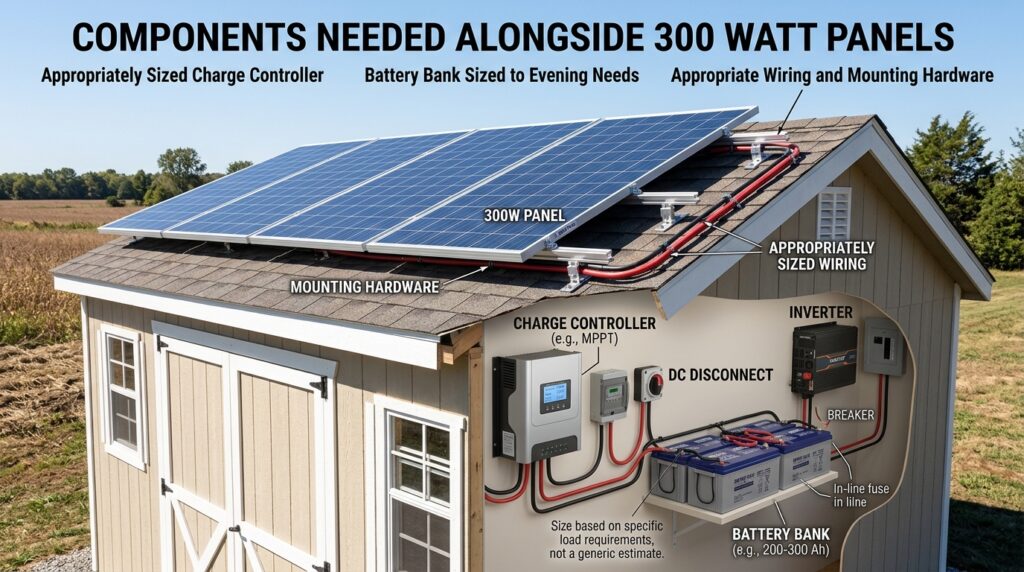
A 300 watt panel setup requires the same supporting components as any solar system: an appropriately sized charge controller, typically a PWM or MPPT unit rated for the combined output of your panel array, a battery bank sized to your evening and backup power needs, and appropriate wiring and mounting hardware. For a four-panel, 1,200 watt setup, a battery bank in the range of 200 to 300 amp-hours is generally sufficient for moderate evening backup needs, though exact sizing should be calculated based on your specific load requirements during a proper energy audit rather than a generic estimate.
As with the 280 watt segment, the mid-wattage panel market in Pakistan includes a wide range of sellers with varying quality consistency compared to premium Tier-1 panels used in full rooftop installations, covered in our guide to the best solar panels in Pakistan. When comparing 300 watt panel quotes, confirming whether the panel has been independently tested for actual output, what warranty terms apply, and whether the seller can provide manufacturer documentation all matter significantly. Pakistan Solar Solutions can source verified 300 watt panels as part of a small backup or commercial system, and our contact page is the quickest way to get current stock availability and pricing for your specific project.
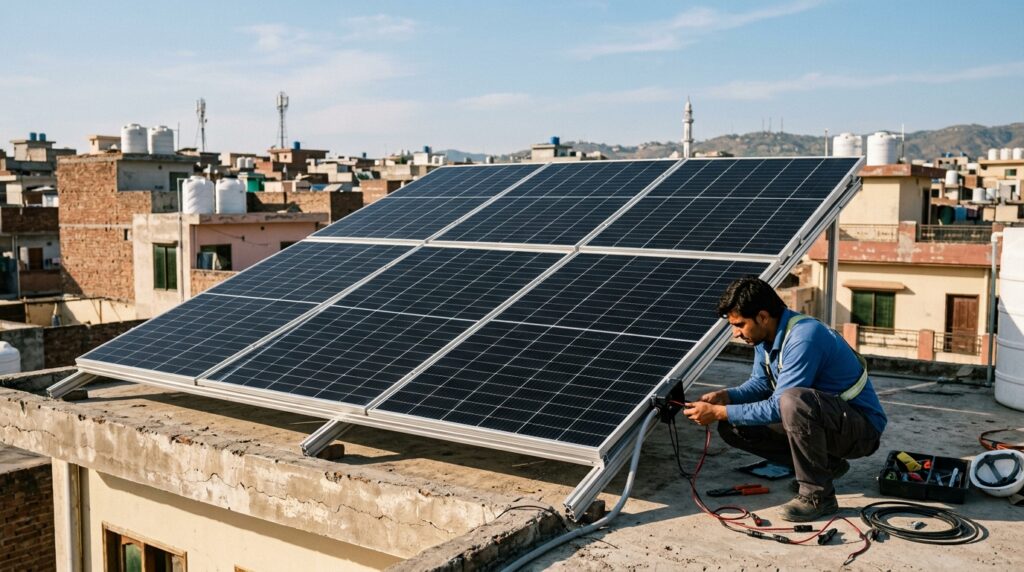
A common scenario among Pakistani buyers is expanding an existing smaller solar setup, perhaps originally built around 150 or 200 watt panels, by adding 300 watt panels to increase total capacity without replacing the entire system. When expanding this way, it is important to confirm that the new 300 watt panels are electrically compatible with your existing charge controller and inverter, since combining panels with meaningfully different voltage and current characteristics within the same string can create mismatches that reduce overall system efficiency. In many cases, running the new 300 watt panels as a separate string with their own dedicated charge controller input, rather than mixing them directly with older, different-wattage panels, provides more reliable performance and avoids the technical complications that can arise from combining mismatched panel specifications. Our team can assess your existing setup during a site visit and recommend the best approach for expanding capacity using 300 watt panels or an alternative wattage better suited to your specific existing equipment.
Like all solar panels, 300 watt units perform differently across Pakistan’s seasons, with peak output occurring during the long, sunny days of summer and somewhat reduced generation during winter months when days are shorter and the sun sits lower in the sky. For buyers relying on a 300 watt panel setup specifically for evening backup power during load shedding, it is worth noting that summer months, when load shedding is often most frequent, also happen to align with peak solar generation, creating a naturally favorable overlap between when backup power is most needed and when the system is best positioned to deliver it. Proper mounting angle, covered in detail in our dedicated guide to solar panel angle, remains just as important for 300 watt panels as for any other size, ensuring the system captures as much usable sunlight as possible across the full year rather than only during the most favorable summer conditions.
As of 2026, a 300 watt solar panel in Pakistan typically costs between PKR 13,000 and PKR 18,000 per panel, depending on brand, cell type and warranty terms.
Under good sunlight conditions with five to six peak sun hours, a single 300 watt panel generates roughly 1.2 to 1.5 kilowatt-hours of usable energy per day, before accounting for system losses in the inverter, controller and battery.
The price difference between 300 watt and 280 watt panels is generally modest, often just a few thousand rupees, with 300 watt typically offering a slightly better cost per watt. The better choice often comes down to what is readily available and competitively priced from your local supplier at the time of purchase.
A small shop running lighting, a couple of fans, a small refrigerator and basic electronics for several hours typically needs four to five 300 watt panels, totaling 1,200 to 1,500 watts, combined with an appropriately sized inverter and battery bank.
Warranty coverage varies by brand and seller in this mid-range segment, ranging from around five years on budget options to full 25-year linear warranties on panels from more established manufacturers. Always confirm warranty terms in writing before purchasing.
It is generally not recommended to combine panels of meaningfully different wattage and electrical characteristics within the same string, since this can create mismatches that reduce overall efficiency. Running different wattage panels as separate strings, each with its own charge controller input, is the more reliable approach.