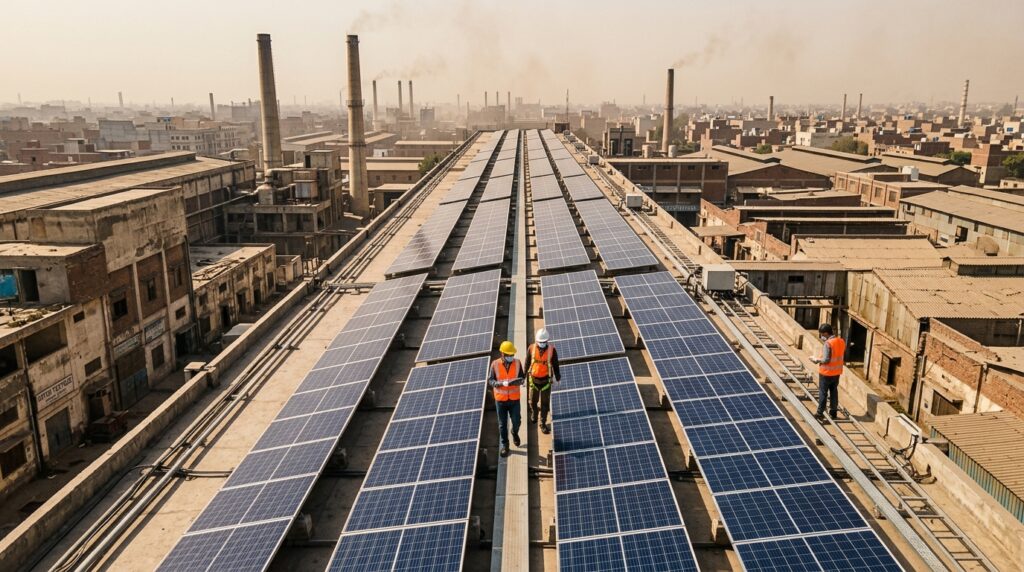


Faisalabad has earned its reputation as the Manchester of Pakistan for good reason, home to one of the country’s largest concentrations of textile mills, power looms and manufacturing units, all of which consume enormous amounts of electricity every single day. That industrial backbone, combined with FESCO’s steadily rising tariffs and frequent load shedding affecting both factories and residential neighborhoods, has made the solar panel price in Faisalabad one of the most searched topics among both business owners and homeowners across the city over the past two years.
This guide covers current 2026 pricing for both residential and industrial solar in Faisalabad, why the city’s manufacturing sector has become one of the fastest-growing solar adoption zones in Punjab, and what local buyers need to know before committing to a system.
Faisalabad’s economy runs on textiles, and textile production is extraordinarily energy-intensive, from spinning and weaving units running machinery around the clock to dyeing and finishing plants that require continuous power for both mechanical processes and climate control. As FESCO’s industrial electricity tariffs have climbed alongside the rest of the national grid, factory owners across Faisalabad have increasingly turned to solar not as an environmental gesture but as a straightforward cost-control measure, since electricity often represents one of the largest line items in a textile unit’s monthly operating expenses.
As of 2026, solar equipment pricing in Faisalabad tracks closely with national averages, since the same importers and Tier-1 manufacturers supply panels to installers across Punjab regardless of city.
Solar panels in Faisalabad currently range from PKR 24 to PKR 55 per watt, with older P-Type and Mono PERC panels sitting toward the lower end of that range and premium N-Type bifacial panels from brands like Longi and Jinko Tiger Neo commanding the higher end due to their superior heat performance, an especially relevant factor given Faisalabad’s long, intense summer season.
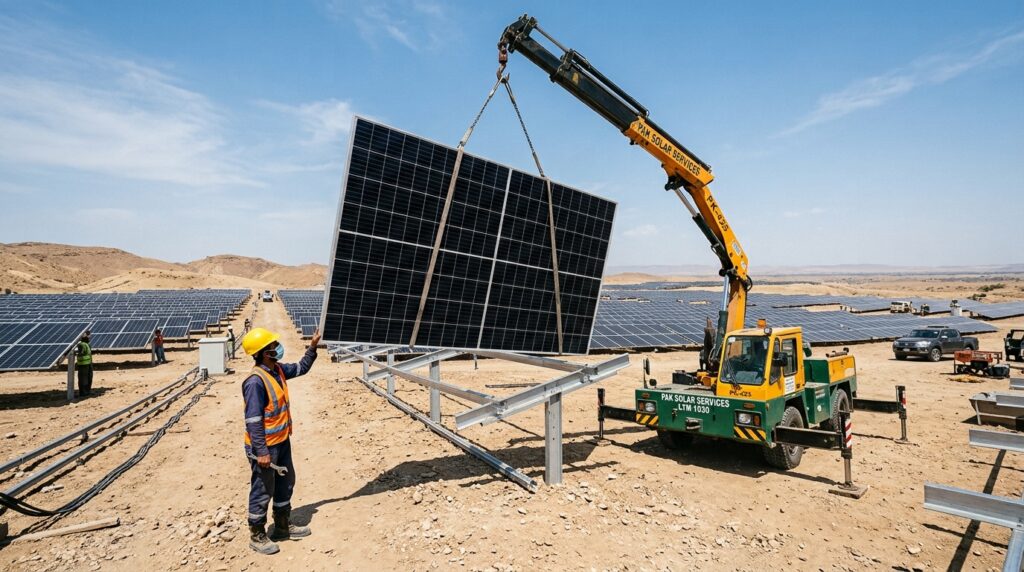
A complete, professionally installed 5 kW on-grid system in Faisalabad typically costs between PKR 650,000 and PKR 850,000, while a 5 kW hybrid system with lithium battery backup, increasingly popular given the city’s load shedding patterns affecting both residential and light industrial areas, ranges from PKR 850,000 to PKR 1,100,000. For larger commercial and industrial buyers, systems above 50 kW are generally quoted individually based on load analysis and roof or ground-mount availability, with the lowest cost per kWh typically achieved on projects above 100 kW due to economies of scale.
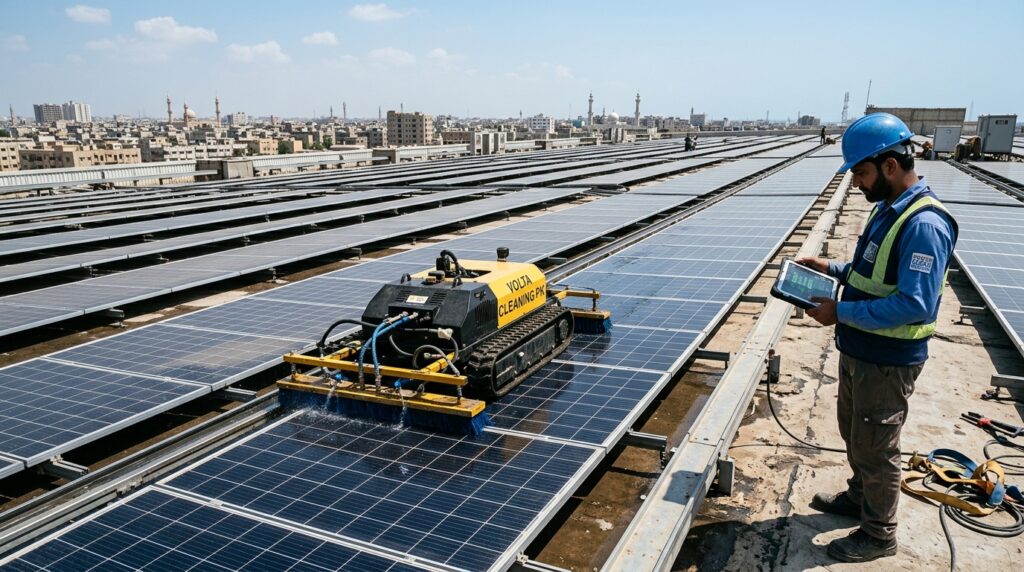
For a mid-sized power loom or spinning unit, electricity costs can consume a substantial share of total operating expenses, making even a modest reduction in grid dependence financially significant over the life of a solar system. Industrial solar clients across Punjab, including many in Faisalabad, typically see a fifty to seventy percent reduction in electricity expenditure once a properly sized system is commissioned, with full return on investment often achieved within two to three years on larger installations. Beyond direct savings, factory owners are also increasingly motivated by the reliability angle, since a hybrid or properly designed on-grid system with net metering reduces exposure to unplanned outages that can halt production lines and cause costly downtime. Our commercial and industrial solar solutions team has worked extensively with manufacturing clients across Punjab, handling everything from load-flow analysis to full NEPRA net metering documentation.
Residential demand in Faisalabad has grown steadily alongside the industrial market, particularly in established neighborhoods where homeowners are looking to reduce increasingly burdensome monthly electricity bills. A standard 5 kW system remains the most common choice for medium-sized homes across the city, typically reducing a household’s monthly bill by PKR 10,000 to 18,000 depending on baseline consumption. Larger homes, particularly those running multiple air conditioners through Faisalabad’s hot summer months, often require a 7 kW to 10 kW system to meaningfully offset consumption, and our residential solar solutions team conducts a free site survey to determine the right system size for each specific household.
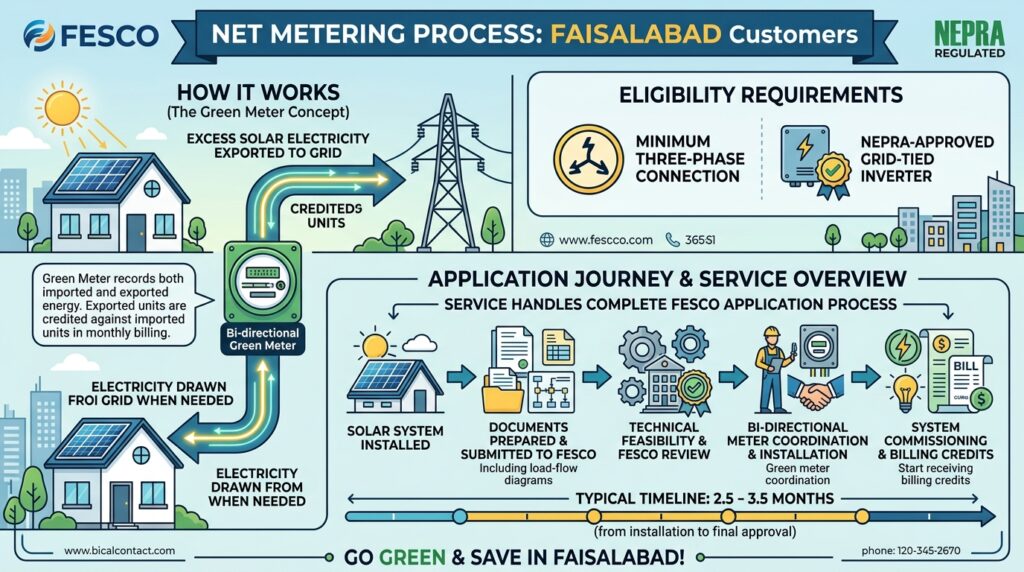
Net metering in Faisalabad operates through FESCO, following the same NEPRA-regulated framework applied across all Pakistani DISCOs. Once a system is installed, a bi-directional green meter records both electricity drawn from the grid and surplus solar electricity exported back to it, with the exported units credited against the imported units at billing time. Eligible customers need a minimum three-phase connection and a NEPRA-approved inverter, and our net metering services handle the complete FESCO application process on behalf of Faisalabad customers, including load-flow diagrams and green meter coordination, which typically results in approval within two and a half to three and a half months of installation.
Faisalabad experiences a mix of grid outages that vary significantly by neighborhood and by season, with some areas facing more frequent load shedding than others depending on feeder capacity and local demand. For customers in areas with relatively stable grid supply, an on-grid solar system offers the lowest upfront cost while still delivering strong bill reduction through net metering. For customers in neighborhoods or industrial zones with more frequent outages, a hybrid solar system with lithium battery backup provides continuous power regardless of grid status, which is particularly valuable for manufacturing units where even short outages can disrupt production schedules or damage sensitive machinery.
The same Tier-1 brands available across Pakistan are actively installed throughout Faisalabad, including Longi Hi-Mo X10 and Jinko Tiger Neo for buyers prioritizing maximum efficiency and heat tolerance, JA Solar N-Type as a strong value-focused alternative, and Canadian Solar HiKu7 and Trina Vertex N for larger commercial and industrial projects. A full comparison of these brands, including efficiency ratings and warranty terms, is available in our guide to the best solar panels in Pakistan.
Because pricing depends heavily on system type, panel brand, roof or ground-mount conditions and current exchange rates, any quote should be based on an actual site visit rather than a generic estimate pulled from an online price list. Pakistan Solar Solutions offers a free energy audit and site survey for Faisalabad customers, covering both residential rooftops and industrial facilities, ensuring the final quotation reflects your actual consumption pattern and site conditions rather than a one-size-fits-all package. You can request a custom quote through our contact page.
As of 2026, solar panels in Faisalabad cost between PKR 24 and PKR 55 per watt depending on brand and technology, with a complete installed 5 kW on-grid system typically costing PKR 650,000 to PKR 850,000.
Yes, industrial solar clients in Faisalabad’s textile sector typically see a fifty to seventy percent reduction in electricity expenditure, with full return on investment often achieved within two to three years for larger commercial-scale systems.
Net metering approval through FESCO typically takes two and a half to three and a half months after installation, provided all technical documentation is prepared correctly by a PEC-certified engineer.
This depends on how frequently your specific neighborhood or facility experiences load shedding. Areas with stable grid supply generally do well with a lower-cost on-grid system, while areas with frequent outages benefit more from a hybrid system with battery backup for uninterrupted power.
Yes, we deliver solar installations across Pakistan including Faisalabad, alongside our primary offices in Karachi, Sukkur and Rawalpindi. Contact our team to arrange a free site survey for your Faisalabad property or facility.