
Solar panel wattage has climbed dramatically over the past decade, and buyers researching the highest watt solar panel currently available are usually trying to understand exactly where the technology ceiling sits today, whether that maximum is actually available in Pakistan, and whether chasing the absolute highest number genuinely makes sense for their specific project. This guide covers where the true global ceiling currently stands, what is realistically available through the Pakistani market, and who actually benefits from pushing toward the largest possible panel size rather than settling for the current mainstream standard.
For a detailed breakdown of the 700 watt category specifically, which represents the current practical ceiling for most Pakistani commercial and large residential projects, our dedicated guide to 700 watt solar panels covers pricing, brands and applications in depth. This guide takes a broader view, covering the technology trajectory and the absolute highest-wattage options globally alongside what is genuinely accessible in Pakistan today.
The absolute highest-wattage solar panels being produced by leading global manufacturers as of 2026 reach into the range of 700 to 800 watts for standard commercial-format panels, with certain specialized ultra-large-format panels produced by a small number of manufacturers pushing modestly beyond this range for specific utility-scale applications. These extreme upper-end panels represent the current cutting edge of large-format cell technology and manufacturing capability, combining the largest physically practical cell formats with the most advanced N-Type and bifacial technology available. It is worth understanding that this absolute ceiling continues shifting upward gradually as manufacturers refine large-format cell production, meaning the specific highest-wattage figure available today will likely be surpassed again within the next few years as the technology continues its steady historical progression.
While the absolute global ceiling occasionally pushes toward 800 watts for specialized products, the practical highest-wattage panels genuinely accessible through established Pakistani solar importers and installers currently top out around 700 to 715 watts, representing the flagship offerings from major Tier-1 manufacturers including Longi, Jinko, JA Solar, Canadian Solar and Trina, all of whom supply the broader Pakistani market. Panels beyond this range, while technically existing in the global market, are generally not readily available through standard Pakistani import channels, either because they represent extremely limited production runs targeted at specific utility-scale international projects, or because importing such specialized, low-volume products into Pakistan would involve considerably higher cost and longer lead times than sourcing the widely available 700 watt flagship products that already represent the practical ceiling for the vast majority of Pakistani commercial and industrial projects.
Understanding why manufacturers continue pushing toward higher wattage panels helps clarify whether this trend is likely to continue and what it means for buyers evaluating their options today. Larger panels reduce the total number of individual units needed to reach any given system capacity, which lowers mounting structure costs, reduces the number of electrical connections and junction boxes that represent potential long-term failure points, and speeds up installation time for large-scale commercial and industrial projects. This economic logic applies with particular force at utility scale, where even modest percentage reductions in total panel count, mounting hardware, and installation labor translate into meaningful absolute cost savings across projects spanning hundreds of kilowatts or more, explaining why manufacturers have consistently pushed toward larger cell formats and higher wattage ratings over the past several years, a trend covered in more general terms in our guide to high efficiency solar panels.
The highest-wattage panels currently available combine several advanced technologies working together rather than relying on any single innovation. Large-format cell architecture, using bigger individual silicon wafers than older panel generations, forms the foundation, allowing more total cell area within a single panel frame. N-Type TOPCon cell technology, discussed in detail in our high efficiency solar panels guide, contributes higher per-cell efficiency, meaning each unit of physical cell area converts more sunlight into usable electricity. Bifacial design, covered in our dedicated guide to bifacial solar panels, often features in these highest-wattage flagship products as well, adding further effective energy yield beyond the front-side rated wattage alone under appropriate mounting conditions. This combination of larger physical size, higher cell efficiency, and bifacial capability together produces the dramatic wattage figures now representing the top of the market.
Despite the appeal of simply choosing the highest available number, the highest-wattage panels are not automatically the right choice for every project, and understanding who genuinely benefits helps avoid unnecessary cost or structural complexity for projects that do not actually need this scale.
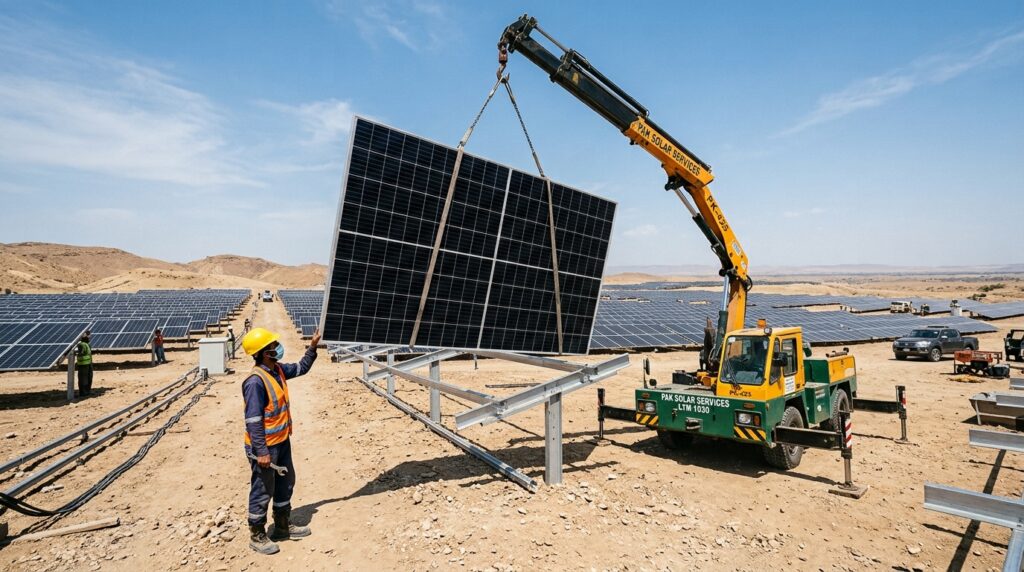
Solar farms and large industrial installations spanning hundreds of kilowatts to multiple megawatts represent the clearest beneficiary of the highest-wattage panels available, since the cumulative savings in mounting hardware, electrical connections, and installation labor across such a large project scale meaningfully with each incremental increase in individual panel wattage.
Commercial properties with genuinely limited rooftop area relative to their desired system capacity, particularly in dense urban business districts where every square meter of usable roof space carries real opportunity cost, benefit from maximizing individual panel wattage to squeeze the greatest possible capacity into a fixed, constrained footprint.
For the vast majority of standard residential installations, discussed throughout our residential solar solutions guide, the highest-wattage panels currently available are generally unnecessary and sometimes impractical, given their considerable physical size and weight relative to typical residential mounting structures. The mainstream 550 to 600 watt category, covered in our dedicated guide to 550 watt solar panels, remains the more practical and cost-effective choice for the overwhelming majority of residential projects, where the marginal benefit of maximizing individual panel wattage rarely outweighs the added structural and handling considerations involved.
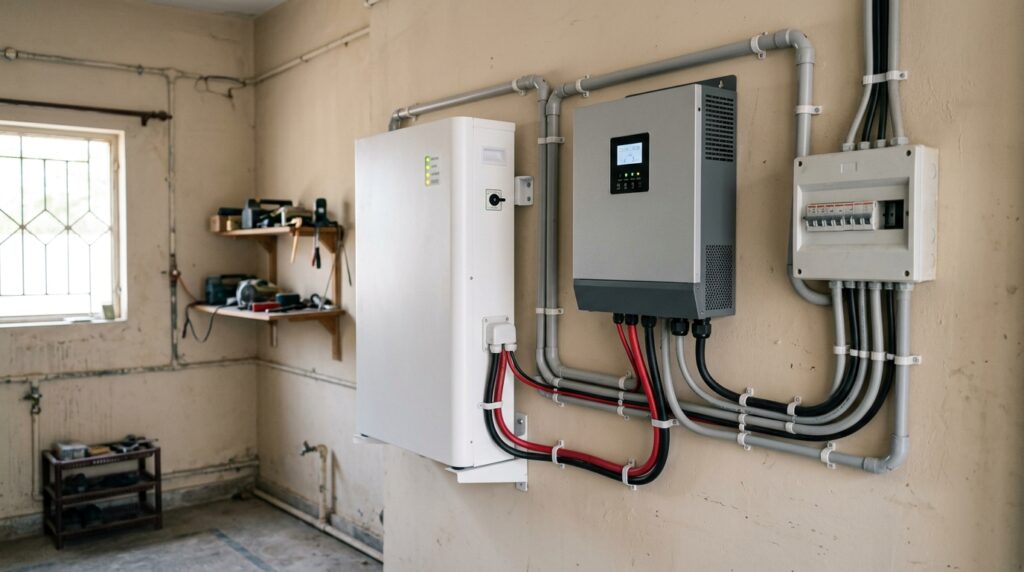
Panels at the very top of the current wattage range are physically large and heavy, typically weighing considerably more than standard residential panels and requiring correspondingly robust mounting structures rated for this additional weight and wind load. Standard residential rooftop mounting hardware common across Pakistan is generally not designed or rated for panels at this extreme upper end of the current wattage range, meaning any project considering these panels requires a proper structural assessment before installation, a consideration our engineering team evaluates as standard practice for any project involving panels above the mainstream 600 watt range. These panels also produce meaningfully higher voltage and current output per unit than standard panels, requiring careful inverter string sizing to remain within safe operating limits, a technical detail our team manages during system design for any project specifying these higher-capacity panels.
As of 2026, the highest-wattage panels genuinely available through Pakistani import channels, generally in the 700 to 715 watt range, typically cost between PKR 25,000 and PKR 34,000 per panel, translating to roughly PKR 36 to PKR 48 per watt, broadly comparable on a per-watt basis to premium panels at more standard wattage levels within the broader national pricing range covered in our overview of the best solar panels in Pakistan. Buyers should not expect a meaningful per-watt cost penalty simply for choosing the highest available wattage, since manufacturers generally price these flagship products competitively to encourage adoption in the large-scale commercial and industrial projects where they deliver the most genuine value.
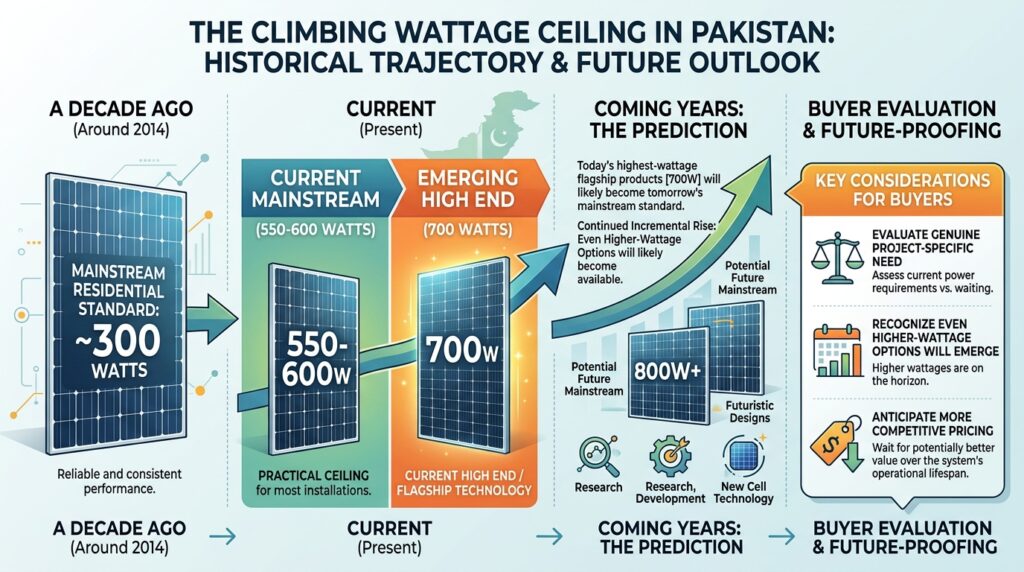
Given the consistent historical trajectory of solar panel wattage climbing year over year, driven by ongoing advances in cell technology and manufacturing scale, buyers can reasonably expect the practical ceiling available in Pakistan to continue rising incrementally over the coming years, following the same pattern that has taken the mainstream residential standard from around 300 watts a decade ago to the current 550 to 600 watt norm, with 700 watt panels now representing the emerging high end. This trajectory suggests that today’s highest-wattage flagship products will likely become tomorrow’s mainstream standard, similar to how today’s mainstream 550 to 600 watt panels represented cutting-edge technology only a few years ago, meaning buyers evaluating whether to invest in the current highest-wattage tier should weigh genuine project-specific need against the reality that even higher-wattage options will likely become available and more competitively priced over the system’s own operational lifespan.
Rather than defaulting to whatever wattage happens to represent the current highest available figure, the right choice depends on your specific project scale, roof or ground-mount space, and budget priorities, a decision framework covered in more general terms in our guide to which solar panel is best in Pakistan. Pakistan Solar Solutions can advise honestly on whether the highest-wattage panels currently available genuinely suit your specific project or whether a more standard wattage delivers equivalent practical value at a more straightforward structural and installation complexity, available through a free site survey arranged via our contact page.
As of 2026, the highest-wattage panels readily available through established Pakistani solar importers reach approximately 700 to 715 watts, representing the flagship offerings from major Tier-1 manufacturers including Longi, Jinko and JA Solar.
Yes, specialized ultra-large-format panels from certain manufacturers occasionally push modestly beyond 700 watts for specific utility-scale international projects, though these are generally not readily accessible through standard Pakistani import channels compared to the widely available 700 watt flagship products.
For most standard residential installations, no. The highest-wattage panels are physically large and heavy, generally more suited to large commercial and industrial projects or severely space-constrained buildings, while the mainstream 550 to 600 watt range remains more practical for typical residential rooftops.
Generally not significantly. Manufacturers typically price their flagship highest-wattage products competitively on a per-watt basis, broadly comparable to other premium panels within the same technology tier, rather than charging a substantial wattage premium.
Very likely, based on the consistent historical trajectory of rising panel wattage driven by ongoing cell technology and manufacturing advances. Today’s highest-wattage flagship panels will likely become tomorrow’s mainstream standard, similar to how the current 550 to 600 watt norm represented cutting-edge technology only a few years ago.