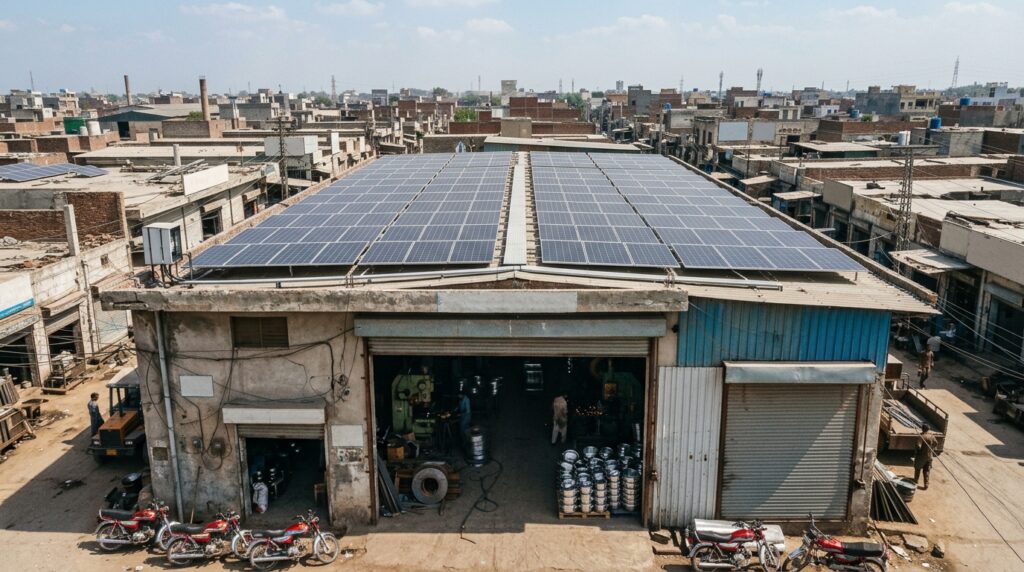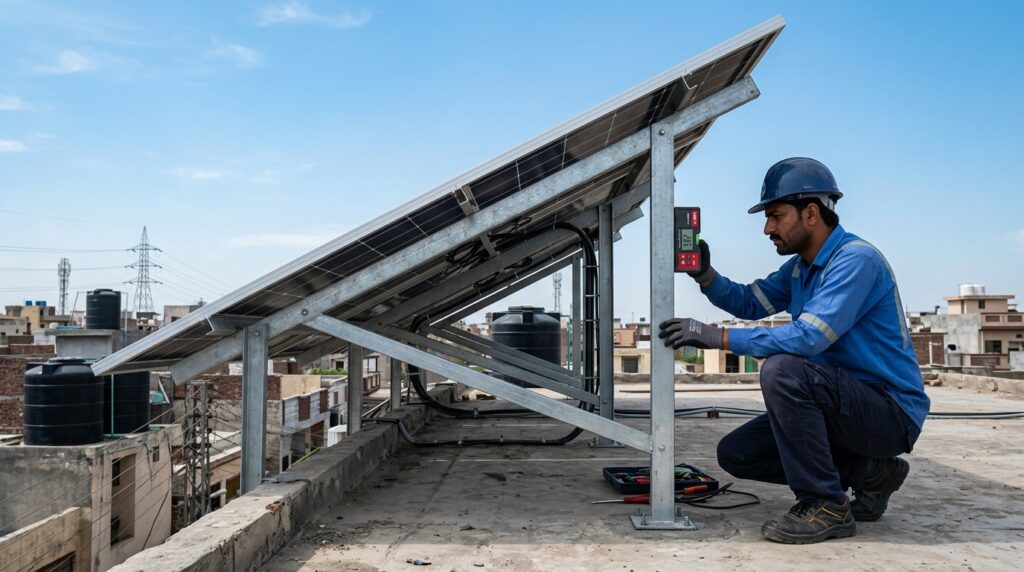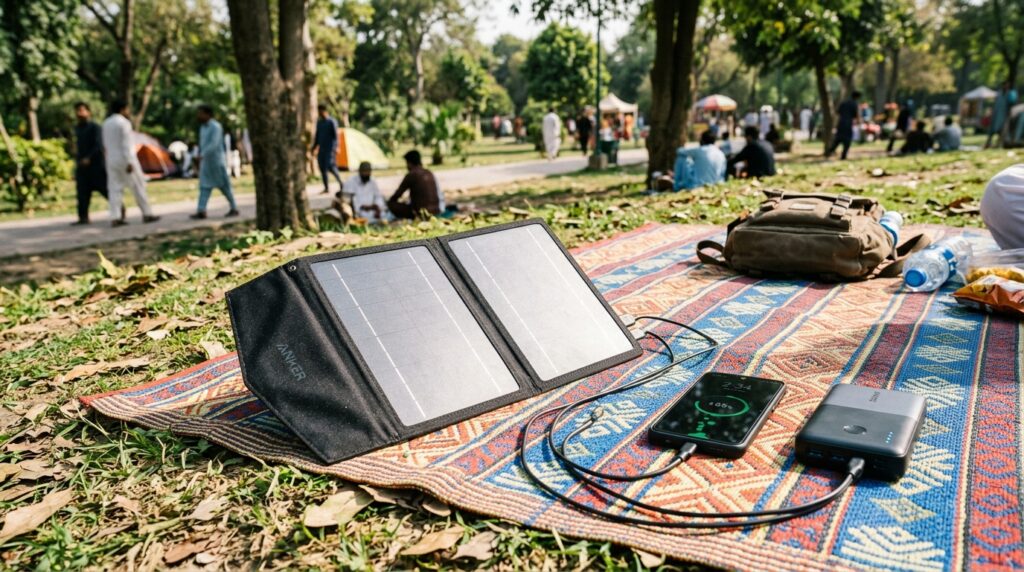
Electricity in Pakistan is expensive, unreliable, and increasingly unavailable during evening hours in many regions due to ongoing load shedding. For lighting needs ranging from a single garden pathway to an entire village street grid, solar lights have become the most practical, most affordable, and most rapidly adopted renewable energy product across the country. From the remote villages of Balochistan to the rooftop terraces of Lahore’s urban homes, solar lights are transforming how Pakistanis illuminate their lives.
At Pakistan Solar Solutions, solar lighting is one of the most accessible entry points for Pakistani consumers into renewable energy. Unlike a full rooftop solar system with inverter and battery bank, a solar light is a self-contained unit requiring no installation expertise, no wiring, and no connection to an existing electrical system. Understanding the different types of solar lights available in Pakistan, their prices, capabilities, and ideal use cases helps you choose the right product for your specific needs.
Every solar light, regardless of size or application, works on the same basic principle. A small solar panel on top of the unit absorbs sunlight during the day and converts it into DC electricity, which is stored in a built-in rechargeable battery. When darkness falls, a light sensor automatically activates the LED light, which draws from the stored battery power. In the morning, the sensor detects daylight and turns the light off while the solar panel begins charging the battery again.
This completely self-contained cycle requires no external power supply, no wiring, and no monthly electricity cost. For Pakistan, where grid electricity costs have risen dramatically and load shedding frequently leaves streets, homes, and commercial areas in darkness during evening hours, solar lights represent a genuinely liberating technology.
Pakistan’s solar resource is an enormous advantage for solar light performance. With an average of eight to ten hours of strong sunlight per day throughout most of the year across most of the country, solar lights charge faster and store more energy in Pakistan than in most other countries. Even during winter months in northern areas like Islamabad and Peshawar, the solar irradiance is sufficient to fully charge most solar lights within six to eight hours, providing six to twelve hours of illumination overnight.
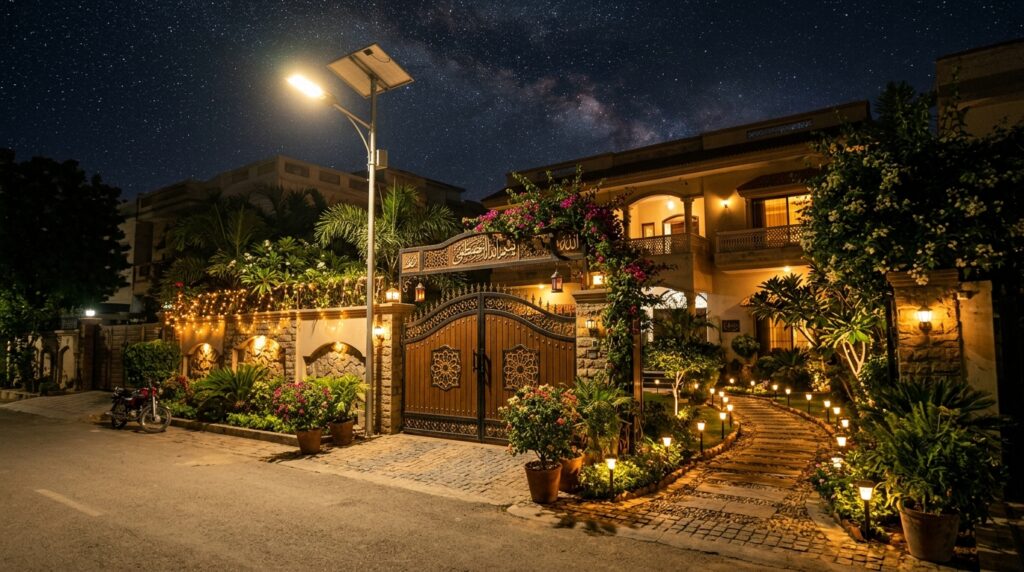
The solar light market in Pakistan covers a wide range of product types, each designed for a different application.
Solar street lights are the largest and most powerful category, designed for illuminating roads, streets, parking areas, and public spaces. They typically feature high-power LED arrays of thirty to two hundred watts, large solar panels, and substantial battery banks capable of providing illumination for two to three consecutive cloudy nights without recharging. Solar street lights in Pakistan are used extensively by local governments, housing societies, and commercial developers who want to illuminate roads without bearing ongoing electricity costs. Their price in Pakistan ranges from fifteen thousand to over two hundred thousand rupees per unit depending on LED wattage and battery capacity.
Solar garden lights are small decorative lights designed for pathways, flower beds, boundary walls, and garden aesthetics. They are typically low-power, consuming one to five watts, and are available in dozens of designs from simple stake lights to decorative lanterns. Solar garden lights in Pakistan are priced from five hundred to five thousand rupees per piece and are extremely popular among urban homeowners.
Solar wall lights or security lights are designed to mount on walls and provide functional illumination for entrances, driveways, and outdoor areas. Many models include PIR motion sensors that activate the light when movement is detected, saving battery power and providing security benefits. Solar security lights in Pakistan cost between two thousand and fifteen thousand rupees depending on LED power and sensor capability.
Solar indoor lanterns and portable solar lights are designed for household use during load shedding or for rural households without grid access. These typically include a small foldable panel that charges a battery during the day, with the lantern providing light indoors at night. Prices in Pakistan range from eight hundred to eight thousand rupees.
Solar flood lights are high-power solar lights used for illuminating large outdoor areas such as sports grounds, construction sites, farms, and commercial properties. They consume fifty to two hundred watts and are priced from twenty thousand to one hundred thousand rupees per unit.
Understanding the solar light price landscape in Pakistan across different product categories helps you budget effectively. Entry-level solar garden stake lights start from five hundred rupees per piece and are available at most hardware stores across Pakistan. A set of six to eight pathway lights for a typical home garden costs three thousand to twelve thousand rupees.
Solar wall lights with motion sensors, suitable for home security and gate illumination, are priced from two thousand to fifteen thousand rupees in Pakistan. Mid-range models with thirty to fifty watts of LED output and quality sensors cost five thousand to ten thousand rupees and are the most popular segment for urban Pakistani homeowners.
Solar street lights for housing society roads and public spaces are priced from fifteen thousand to one hundred and twenty thousand rupees for standard models. High-power models exceeding one hundred watts with multiple nights of battery backup cost more. For complete solar street lighting projects covering multiple installations, Pakistan Solar Solutions offers project pricing and can design complete solar lighting systems tailored to your development.
For indoor solar lanterns, prices in Pakistan range from eight hundred to eight thousand rupees. Premium models with USB charging ports, multiple light modes, and long battery life cost three thousand to six thousand rupees and are in very high demand in rural Pakistan and urban areas with severe load shedding.
Selecting the right solar light for your home requires matching the product’s capabilities to your specific needs. Several factors determine which product category is appropriate.
The first consideration is location. Lights installed in areas with direct, unobstructed sunlight throughout the day charge most efficiently. Lights installed in partially shaded areas, such as under trees or on north-facing walls, may not charge fully every day and need a higher-capacity battery to ensure full-night illumination. Check the solar panel placement of any light you consider and ensure it can receive at least five to six hours of direct sunlight daily in your specific installation location.
The second consideration is purpose. For pure security, a motion-activated solar wall light with high lumen output for short bursts is ideal. For pathway aesthetics, low-power solar garden lights provide gentle illumination throughout the night. For functional outdoor illumination throughout the night, a higher-power solar wall or street light with sufficient battery capacity for eight to ten hours of continuous operation is needed.
Battery type matters significantly for longevity and cold-weather performance. Solar lights with lithium iron phosphate batteries, as discussed in our lithium ion solar battery guide at Pakistan Solar Solutions, outperform those with lead-acid or standard lithium-ion batteries in both cycle life and cold-weather performance. For northern Pakistan where winter temperatures drop significantly, lithium iron phosphate batteries are strongly recommended.
LED efficiency and colour temperature are the final considerations. High-quality LEDs provide more lumens per watt, meaning brighter light from the same battery charge. Colour temperature measured in Kelvin affects the character of the light: warm white at two thousand seven hundred to three thousand Kelvin is pleasant for home gardens and entrances, while cool white or daylight at five thousand to six thousand five hundred Kelvin is preferred for security and street lighting where maximum visibility is the priority.
One of the fastest-growing applications of solar lights in Pakistan is solar-powered street lighting in housing societies, gated communities, industrial estates, and rural roads. Traditional street lighting requires expensive underground cabling, transformer connections, and ongoing electricity payments to the local DISCO. Solar street lights eliminate all three costs.
Modern solar street lights for Pakistani roads are integrated all-in-one units where the solar panel, LED light, battery, and controller are all contained in a single compact unit mounted on a pole. Installation requires only the erection of the pole, with no trenching or electrical connection required. This dramatically reduces installation cost and timeline compared to conventional street lighting.
For a typical residential road of two hundred meters, twelve to fifteen solar street lights of thirty to forty watts each provide adequate illumination. The complete supply and installation cost for such a project in Pakistan is typically between six hundred thousand and one million five hundred thousand rupees, compared to the ongoing electricity bill of a conventional lighting system of thirty thousand to sixty thousand rupees per month. The solar street lighting system pays for itself within three to four years through eliminated electricity costs.
At Pakistan Solar Solutions, we design and supply complete solar street lighting systems for housing societies, commercial developments, and government projects across Pakistan.
Pakistan’s agricultural and rural population faces severe electricity access challenges. Many villages in Balochistan, southern Punjab, and interior Sindh receive only a few hours of grid electricity per day, with load shedding extending to sixteen to twenty hours in some areas. For these communities, solar lights are not a convenience but a fundamental necessity for evening activities, children’s studying, and farm security.
Solar-powered farm lights for crop storage areas, animal sheds, and farmhouse boundaries are available in Pakistan at very accessible prices starting from two thousand rupees per light. Solar-powered boundary lights for farm perimeters provide security against theft of equipment and crops.
For tube wells and irrigation pump stations that currently operate without lighting, solar-powered area lights improve safety for workers operating pumps at night. These can be integrated with the solar pump system’s panels or run independently on their own dedicated small panel and battery combination.
Solar lights are generally low-maintenance, but some basic upkeep extends their life significantly. The solar panel on each light should be wiped clean every two to four weeks, particularly in dusty Pakistani cities. Dust accumulation on the panel reduces charging efficiency, resulting in shorter illumination duration each night. This same principle that applies to large rooftop systems, detailed in our solar plate cleaning guide at Pakistan Solar Solutions, applies equally to small solar lights.
The battery inside each solar light has a finite lifespan. Lead-acid batteries in budget solar lights last one to two years in Pakistan’s heat. Lithium-ion batteries last three to five years. Lithium iron phosphate batteries, used in premium solar lights, can last eight to ten years even in Pakistan’s high temperatures. When a solar light’s illumination duration noticeably decreases, it is usually the battery that needs replacement.
LED light sources themselves are extremely long-lasting and typically outlive the battery by many years. Quality LEDs in solar lights are rated for fifty thousand hours of operation, representing over thirteen years of eight-hour-per-night use.
How long do solar lights stay on in Pakistan throughout the night? Most quality solar lights with a full day’s charge in Pakistan provide six to twelve hours of continuous illumination. Motion-activated security lights can last much longer since they only activate when movement is detected, conserving battery power.
Can solar lights work during the monsoon season and cloudy days in Pakistan? Yes, solar lights charge even on cloudy days, though at reduced efficiency. A quality solar light with a lithium battery and two to three days of reserve capacity will provide full illumination even after consecutive cloudy days. The monsoon season in Pakistan typically brings cloudy days that reduce charging, so choosing lights with adequate battery reserve is important.
Are solar lights suitable for use inside the home during load shedding? Indoor solar lanterns and portable solar lights are specifically designed for this purpose. They charge on a windowsill or outdoors during the day and provide light indoors during evening load shedding. They are widely available in Pakistan at very affordable prices starting from eight hundred rupees.
What is the lifespan of a solar street light in Pakistan? Quality solar street lights are designed for eight to fifteen years of operation. The LED light source lasts the longest, often fifteen to twenty years. The battery typically needs replacement after four to seven years depending on type. The solar panel lasts twenty to twenty-five years with minor efficiency degradation.
Can I connect solar lights to my existing rooftop solar system? Yes, solar lights designed for twelve or twenty-four volt DC operation can be powered directly from a solar system’s battery bank. This approach gives you much larger panel and battery resources than a standalone solar light, resulting in longer runtime and the ability to power larger, more powerful lights. Contact Pakistan Solar Solutions for guidance on integrating solar lighting into your existing system.