

Pakistan’s agricultural sector is the backbone of its economy, employing nearly forty percent of the labour force and contributing significantly to the country’s GDP and export earnings. Yet for decades, Pakistani farmers have been held hostage by two crippling energy problems: the unreliable and expensive electricity supply from the national grid for running tube wells and irrigation pumps, and the sky-high cost of diesel as a backup power source. These two problems together have quietly drained billions of rupees from Pakistan’s farming communities every year.
The solar system for agriculture in Pakistan has emerged as the most transformative solution to this crisis. Across Punjab, Sindh, Balochistan, and Khyber Pakhtunkhwa, farmers who have installed solar energy systems for their agricultural operations are reporting dramatic reductions in operational costs, improved crop yields from more reliable irrigation, and genuine financial relief after years of energy-related losses. A farmer in Multan who was spending forty thousand to sixty thousand rupees per month on diesel for his tube well is now spending near zero after installing a solar system for agriculture. That saving, compounded month after month and year after year, changes the financial trajectory of an entire farm.
At Pakistan Solar Solutions, agricultural solar has become one of our fastest-growing service areas, and we have helped farmers across Pakistan design and install solar systems that match their specific irrigation requirements, crop schedules, and field configurations. This comprehensive guide covers everything Pakistani farmers and agricultural landowners need to know about the solar system for agriculture in Pakistan.
To understand why the solar system for agriculture in Pakistan has gained such momentum, it is essential to appreciate the scale of the energy problem facing Pakistani farmers. Pakistan has approximately one point two million tube wells across the country, making it one of the most tube-well-intensive agricultural systems in the world. These tube wells are the lifeblood of irrigated agriculture, drawing groundwater to supplement canal irrigation and enable year-round crop production.
The majority of these tube wells are powered by one of three sources: the national electricity grid, diesel engines, or in increasing numbers, solar systems. Grid electricity for agricultural use is notoriously unreliable, with load shedding in rural and semi-urban areas of Pakistan frequently exceeding twelve to sixteen hours per day. Many farmers in southern Punjab, interior Sindh, and Balochistan receive only four to six hours of grid electricity daily, making grid-dependent tube well operation completely impractical for maintaining crop water requirements.
Diesel-powered tube wells are reliable but ruinously expensive. With diesel prices in Pakistan having risen dramatically in recent years and likely to continue rising with international oil price movements and subsidy reductions, a farmer running a ten horsepower diesel pump for eight hours daily is spending between two thousand five hundred and four thousand rupees per day on fuel alone, or seventy-five thousand to one hundred and twenty thousand rupees per month. For small and medium farmers operating on thin margins, this energy cost alone can make the difference between profitability and loss.
The solar system for agriculture in Pakistan eliminates or dramatically reduces this energy cost. After the initial capital investment in the solar system, which is typically recovered within two to four years through fuel and electricity savings, the farmer essentially gets free irrigation energy for the remaining fifteen to twenty years of the solar system’s operational life.
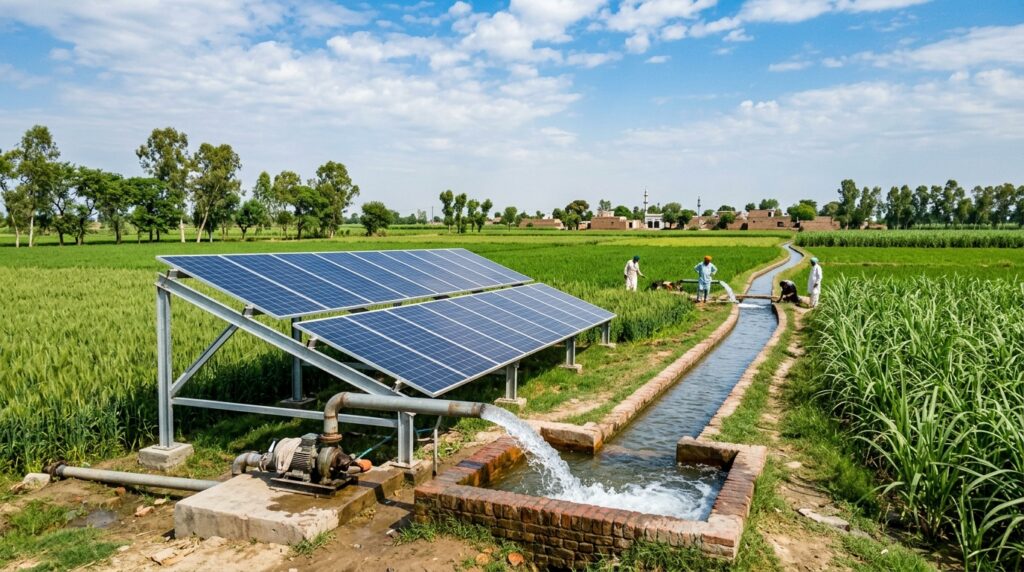
A solar system for agriculture in Pakistan typically consists of solar panels, a solar pump inverter or drive, and a submersible or surface pump. Unlike residential solar systems that focus on electricity generation for household appliances and battery storage, agricultural solar systems are primarily designed to power pumps for irrigation during daylight hours when sunlight is available.
The solar panels generate DC electricity when exposed to sunlight. This DC electricity is fed into a solar pump inverter or variable frequency drive, which converts it to AC power at the appropriate voltage and frequency to run the electric pump motor. As sunlight intensity changes throughout the day, the pump inverter continuously adjusts the motor speed to match the available solar power, ensuring the pump runs at whatever speed the current solar conditions allow rather than stopping completely when clouds pass.
This direct-drive approach, where solar panels power the pump directly without batteries, is the most common and cost-effective configuration for agricultural irrigation in Pakistan. It works on the simple principle that farmers need water during the day when the sun shines, and the pump can run for six to eight hours of peak solar generation, providing the irrigation water needed without requiring any battery storage.
For applications where nighttime irrigation is required, or where water needs to be pumped into a storage tank or elevated reservoir for gravity-fed distribution, batteries can be added to the system to extend operation into evening and nighttime hours. Alternatively, a large overhead or ground-level water storage tank can serve as a form of storage, with the solar pump filling the tank during daytime solar hours for use throughout the day and night.
Pakistani agricultural land has diverse requirements, and the solar system for agriculture in Pakistan comes in several configurations to match different pumping depths, flow rates, and field sizes.
Submersible solar pumps are the most common type used for tube wells in Pakistan. These pumps are installed inside the borehole and push water upward to the surface. They are ideal for deep water tables, which are common in much of Punjab and Sindh where groundwater levels have dropped due to decades of intensive extraction. Submersible solar pump systems in Pakistan are available for pumping depths of thirty to three hundred meters, with motor capacities ranging from one horsepower for small domestic wells to seventy-five horsepower for large commercial agricultural operations.
Surface solar pumps sit at ground level and draw water from rivers, canals, open wells, or ponds. They are simpler and cheaper than submersible pumps but limited to water sources within eight to ten meters of surface level. In areas of Pakistan with canal irrigation systems, surface solar pumps are used to lift canal water into field channels or elevated storage tanks.
Solar drip irrigation systems combine a solar pumping system with drip irrigation infrastructure to deliver water directly to plant root zones with minimal waste. Drip systems are particularly valuable in Pakistan’s water-scarce regions including Balochistan, parts of KPK, and the Cholistan area of Punjab, where reducing water consumption is as important as reducing energy costs. A solar system for agriculture in Pakistan incorporating drip irrigation can reduce water consumption by forty to sixty percent compared to flood irrigation while maintaining or improving crop yields.
Solar sprinkler irrigation systems use solar pumps to pressurize water for overhead sprinkler distribution. They are popular for fruits, vegetables, and fodder crops in Pakistan and offer good water distribution uniformity.
The cost of a solar system for agriculture in Pakistan depends primarily on the pump motor size, pumping depth, and daily water requirement. Understanding the relationship between these factors and the system cost helps farmers plan their investment accurately.
For small agricultural operations requiring a one to two horsepower solar pump for a shallow tube well of thirty to fifty meters depth, a complete solar system for agriculture in Pakistan including panels, pump inverter, and pump costs between one hundred thousand and two hundred thousand rupees installed. This size is suitable for small farms of two to five acres or for domestic plus small irrigation combined use.
For medium agricultural operations with five to ten horsepower pump requirements and medium depth wells of fifty to one hundred and fifty meters, the complete solar system cost ranges from three hundred thousand to seven hundred thousand rupees. This size is the most common in Pakistan’s agricultural solar market and is suitable for farms of five to twenty acres.
For large farms requiring twenty-five to fifty horsepower pumping capacity from deep wells of one hundred and fifty to two hundred and fifty meters, the solar system for agriculture in Pakistan cost ranges from one million to three million rupees installed. These are commercial-scale installations where the diesel cost savings are correspondingly large, often exceeding one hundred thousand rupees per month, making the return on investment extremely attractive.
For a complete system including solar panels, submersible pump, solar pump inverter, cabling, and installation, farmers should request itemised quotations from reputable suppliers. At Pakistan Solar Solutions, we provide full agricultural solar system design and installation services across Pakistan with transparent pricing and documented equipment specifications.
The solar panels used in agricultural solar systems are the same high-quality photovoltaic panels used in residential and commercial systems, but the selection criteria and mounting considerations differ somewhat for agricultural environments.
For agricultural installations in Pakistan, durability and resistance to environmental conditions is particularly important. Panels installed in rural agricultural areas are exposed to dust storms, high humidity in certain seasons, wind loading from open field conditions, and sometimes hail in northern and central Pakistan. Panels with robust aluminium frames, tempered glass of at least three point two millimetres thickness, and IP68-rated junction boxes are recommended for Pakistani agricultural conditions.
Bifacial solar panels are increasingly popular for agricultural ground-mounted systems in Pakistan because the light-coloured soil and crop canopy beneath the panels reflects light onto the rear surface, providing additional energy generation. We cover bifacial panel technology and pricing in detail in our bifacial solar panel price guide at Pakistan Solar Solutions.
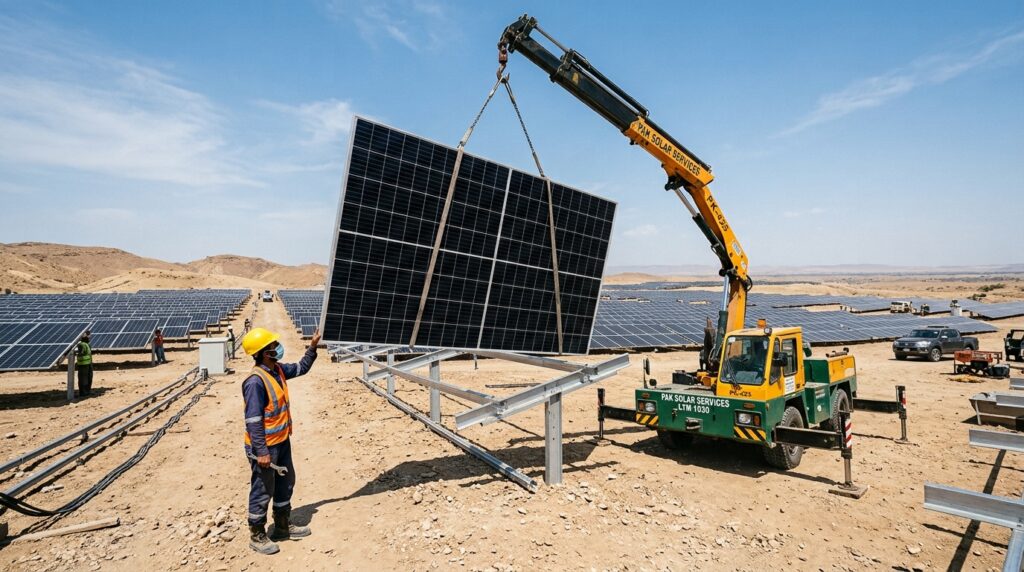
The mounting structure for agricultural solar systems must be designed for the specific wind and soil conditions of the installation site. Ground-mounted structures in open agricultural fields are exposed to wind loads that rooftop installations are largely protected from. Properly engineered galvanised steel structures with concrete foundation piles are required for safe and durable agricultural solar installations. See our solar mounting structure guide at Pakistan Solar Solutions for mounting options available in Pakistan.
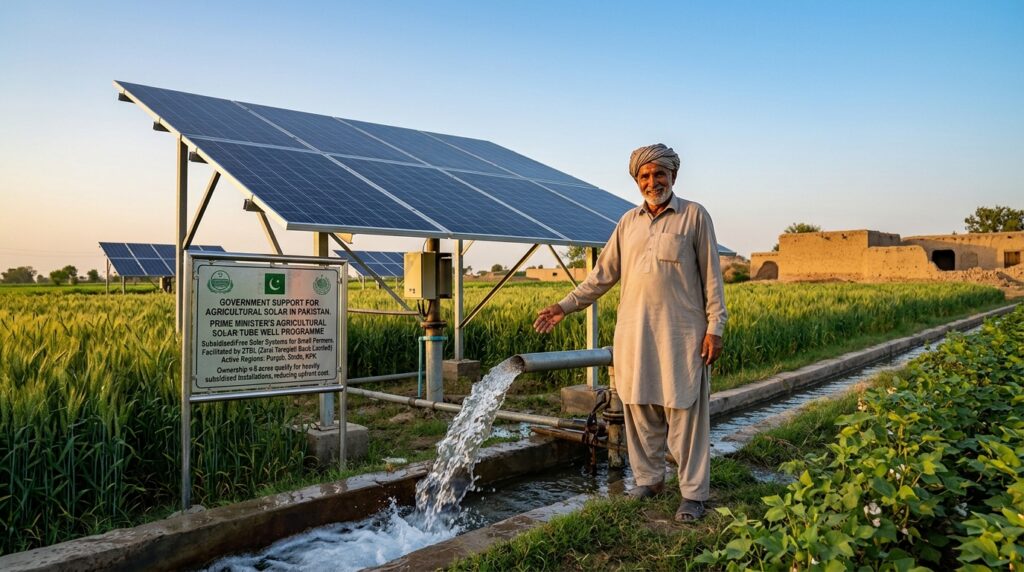
The Pakistani government has recognised the transformative potential of solar energy for the agricultural sector and has introduced several support programmes that reduce the effective cost of a solar system for agriculture in Pakistan for eligible farmers.
The Prime Minister’s Agricultural Solar Tube Well Programme has provided subsidised or free solar tube well systems to small farmers in various provinces, with Punjab and Sindh being the most active implementing provinces. Under some tranches of this programme, farmers owning less than five acres of land qualified for heavily subsidised solar pump installations that reduced their upfront cost to a fraction of the market price.
Provincial agriculture departments in Punjab, Sindh, and KPK have also provided subsidies, low-interest financing, and facilitation support for agricultural solar adoption. ZTBL, the Zarai Taraqiati Bank Limited, offers agricultural financing schemes that include solar system financing for eligible farmers at concessional interest rates.
AEDB, the Alternative Energy Development Board, has worked with distribution companies to facilitate solar-powered agricultural connections and net metering arrangements for farms that generate surplus electricity beyond their pumping needs. While net metering for agricultural solar is less common than for residential systems, the regulatory framework exists and Pakistan Solar Solutions can advise on eligibility and application processes.
The financial case for a solar system for agriculture in Pakistan is among the strongest of any solar application in the country. Unlike residential solar systems where the return comes primarily through electricity bill reduction, agricultural solar delivers returns through elimination of diesel costs, reduction of grid electricity costs, and indirect benefits through improved crop yields from more reliable irrigation.
For a typical medium-sized Punjab farm running a ten horsepower diesel tube well for eight hours daily throughout the year, the monthly diesel cost is typically eighty thousand to one hundred and twenty thousand rupees. A solar system for agriculture in Pakistan capable of running this pump costs approximately four hundred thousand to seven hundred thousand rupees installed. The annual diesel saving of nine hundred and sixty thousand to one million four hundred and forty thousand rupees means the solar system pays for itself within six to nine months. After payback, the farmer saves one million rupees or more annually for the remaining seventeen to twenty-two years of the solar system’s productive life.
Even for smaller farmers with one to three horsepower diesel pumps spending twenty thousand to forty thousand rupees monthly on fuel, a solar pump system costing one hundred and fifty thousand to three hundred thousand rupees pays back within one to two years. These are returns that almost no other farm investment can match, which explains why agricultural solar adoption across Pakistan has been growing at extraordinary rates.
Many Pakistani farmers have both agricultural irrigation needs and household electricity requirements. Designing a combined solar system that serves both purposes can reduce the total system cost compared to installing two separate systems.
A combined system uses a single bank of solar panels and a hybrid solar inverter to provide electricity for household appliances and battery storage while also powering an agricultural pump during peak daylight hours. The solar inverter manages the priority of loads, ensuring household critical loads are always powered first from the battery and solar panels, with excess solar generation diverted to pump operation.
For farms where the homestead is adjacent to the tube well, this combined approach is very cost-effective. For farms where the well is far from the house, separate systems are usually more practical from a wiring cost and management perspective.
If you are considering a combined agricultural and residential solar system, explore our solar energy for home guide at Pakistan Solar Solutions alongside this agricultural guide. Our team designs integrated systems that maximise the value of every panel installed.
What size solar system is needed to run a five horsepower tube well in Pakistan?
A five horsepower submersible tube well pump requires approximately three point seven kilowatts of electrical input. To run this pump with adequate solar capacity for six to eight hours of operation during daylight hours, a solar panel array of five to seven kilowatts is recommended. This provides sufficient power even during partly cloudy conditions and accommodates the startup surge of the pump motor.
Do agricultural solar tube wells in Pakistan require batteries?
For pure daytime irrigation operation, batteries are not required. The solar panels power the pump directly through the pump inverter during daylight hours. If nighttime irrigation is needed, batteries or a water storage tank that fills during the day can be used. Most Pakistani farmers find daytime-only solar pumping sufficient for their irrigation schedules.
How is a solar agricultural pump protected from sand and debris in Pakistan’s conditions?
Quality submersible solar pumps use stainless steel or high-grade polymer housings that resist corrosion and abrasion from sandy groundwater. The motor is hermetically sealed and cooled by the water flowing through the pump. Sand filters installed at the pump inlet further protect the impellers from abrasive wear.
Can I get government subsidy for a solar tube well system in Pakistan?
Yes, various government programmes at federal and provincial level have offered subsidies for agricultural solar tube wells. Eligibility conditions change over time, so checking with your local agriculture department, AEDB, and ZTBL for current programmes is recommended. Pakistan Solar Solutions assists farmers in navigating these programmes.
What maintenance does a solar agricultural system require in Pakistan?
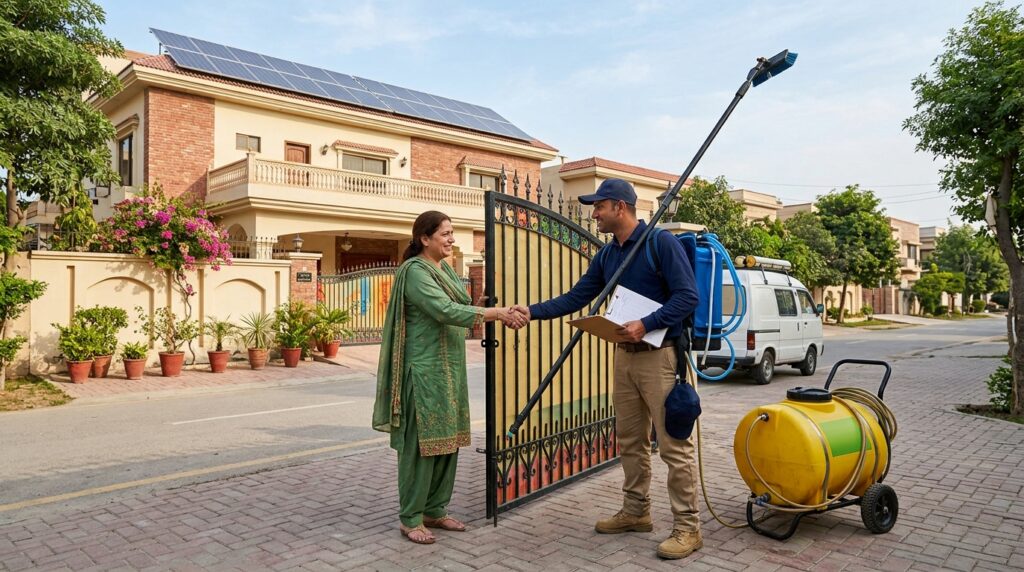
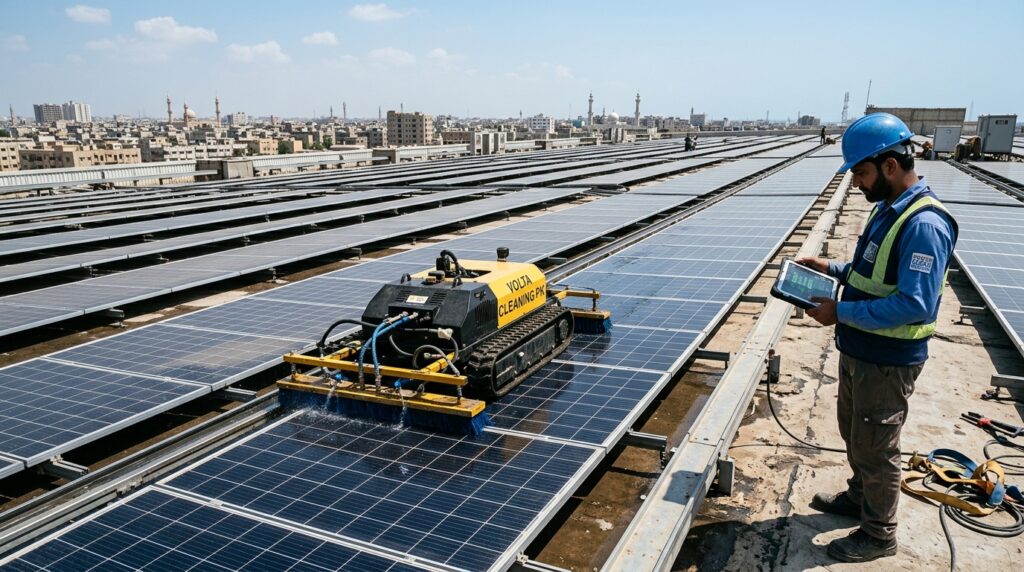
The primary maintenance tasks are cleaning the solar panels every two weeks in dusty seasons to maintain maximum power output, inspecting the pump and motor annually, checking electrical connections for corrosion, and verifying that the pump inverter is operating within normal parameters. Panel cleaning is particularly important in Pakistan’s agricultural dust environment and we cover the correct methods in our solar panel cleaning guide at Pakistan Solar Solutions.