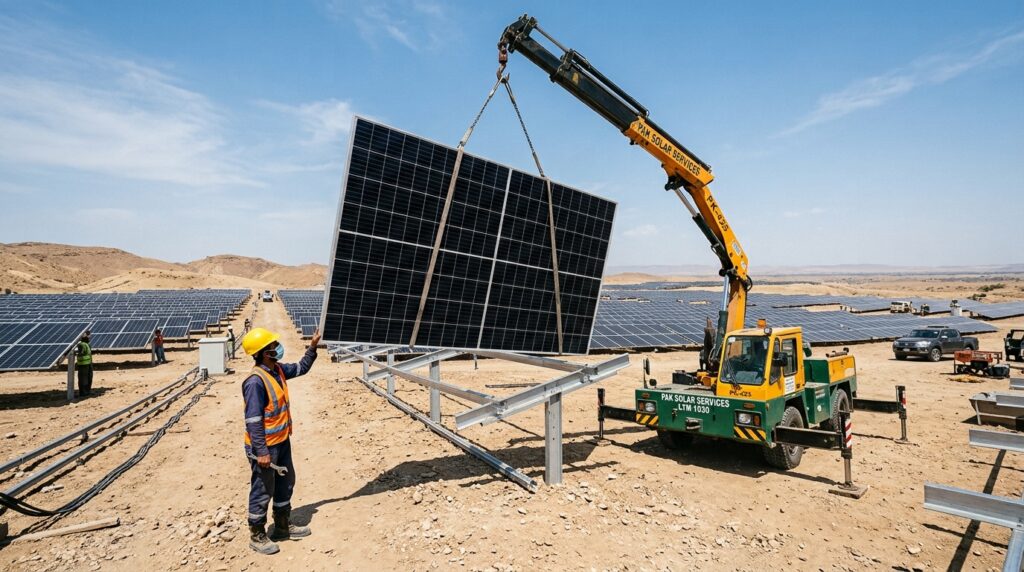
If you have invested in a solar energy system in Pakistan, you already know how transformative it is for your electricity bills and daily life. But there is one maintenance task that most solar panel owners either overlook or do incorrectly, and that is cleaning. In Pakistan’s dusty environment, with frequent winds carrying sand, smog, and bird droppings, dirty solar panels can lose up to thirty percent of their energy output. Using the wrong cleaning method or the wrong tool can scratch the surface, reducing efficiency permanently.
The solar panel cleaning brush is specifically designed to clean photovoltaic panels safely and effectively without causing scratches or water spots. At Pakistan Solar Solutions, we strongly recommend using a dedicated solar panel cleaning brush rather than ordinary household brushes, sponges, or pressure washers, which can damage your panels over time.
Pakistan’s geography and climate create a uniquely challenging environment for solar panels. Cities like Lahore, Karachi, Multan, and Faisalabad experience high levels of airborne dust and pollution throughout the year. In rural areas, agricultural dust and sand from nearby deserts settle on rooftop panels continuously. During the summer months, a combination of dust storms and smog can coat solar panels with a thick layer of grime within days of cleaning.
Even a thin layer of dust on a solar panel surface creates shading, which reduces the electrical output of not just one panel but potentially the entire string of panels connected in series. This phenomenon, known as partial shading loss, can reduce your system’s total energy production by fifteen to thirty-five percent. Regular cleaning with the right solar panel cleaning brush restores your system to full efficiency and protects the long-term value of your investment.

Not all brushes are suitable for cleaning solar panels. The glass surface of a solar panel has a special anti-reflective coating that improves light absorption. This coating is delicate and can be scratched or degraded by abrasive materials, hard bristles, or harsh cleaning chemicals. A scratched panel surface allows less light to pass through, permanently reducing efficiency.
A proper solar panel cleaning brush is made with ultra-soft bristles, usually crafted from microfiber, nylon, or natural animal hair, that are gentle enough to clean the panel surface without leaving scratches. The brush head is also designed to be wide, typically between twenty and sixty centimeters, so you can clean large panel surfaces quickly and evenly. Many solar panel cleaning brushes come with a telescopic or extendable handle so you can reach panels installed on rooftops without needing a ladder, which is both safer and more convenient.
There are several types of solar panel cleaning brushes available, each suited to different needs and budgets.
The basic dry brush is the most affordable option and works well for light dust removal. It has soft bristles and a lightweight frame, and it is ideal for weekly or twice-weekly cleaning in areas with moderate dust. However, it is not effective for removing bird droppings, mud, or oily deposits.
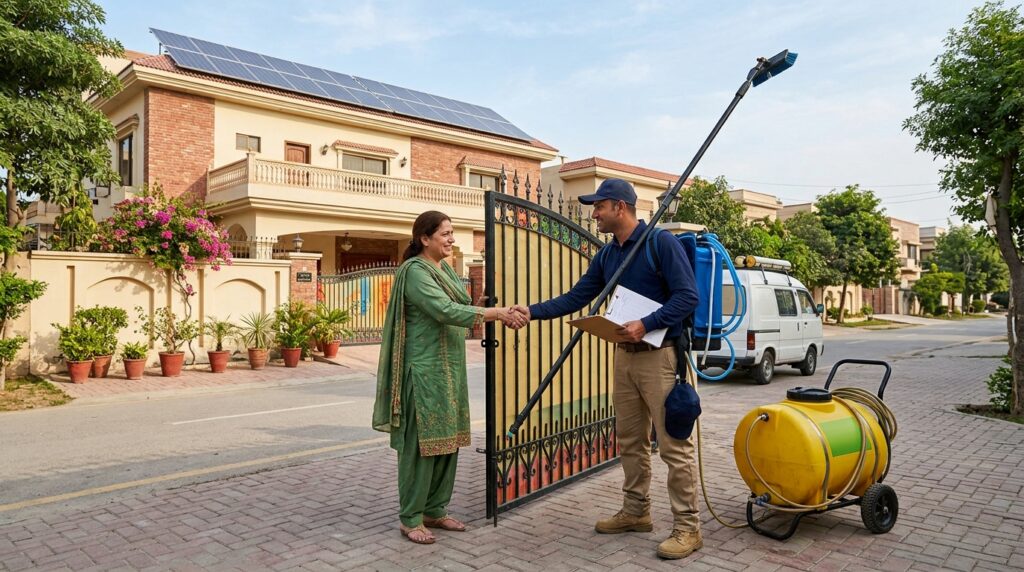
The water-fed solar panel cleaning brush is a step up and is ideal for deeper cleaning. It connects to a water hose, and water flows through the brush head and out through the bristles, rinsing the panel as you scrub. This type of brush is particularly effective because the simultaneous scrubbing and rinsing action lifts stubborn dirt without requiring you to go up on the roof with a bucket. Many professional solar panel cleaning services in Pakistan use water-fed brushes for this reason.
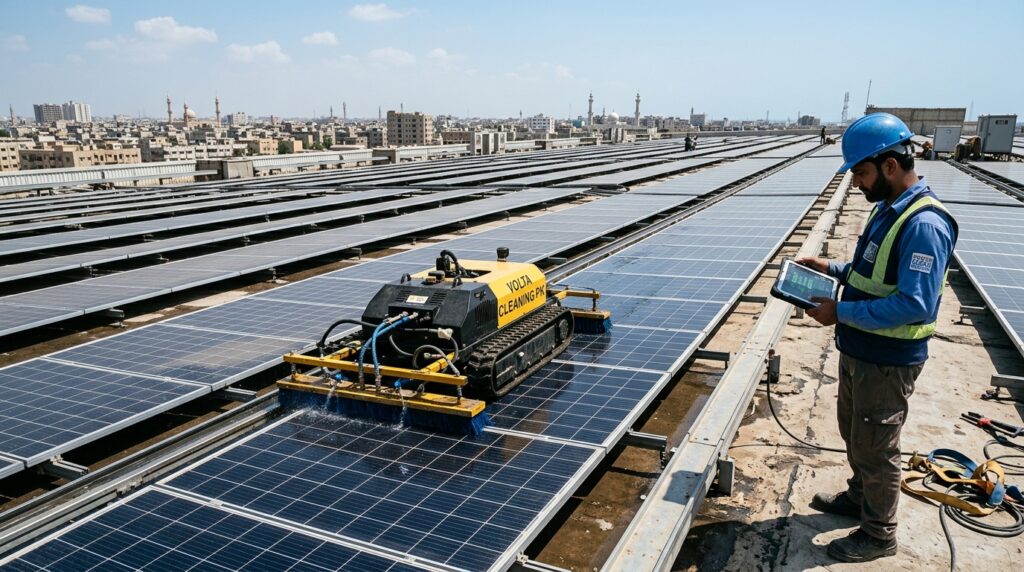
The rotating or motorized solar panel cleaning brush is the most advanced option. It has a motorized head that spins the bristles rapidly, allowing for faster and more thorough cleaning. These are typically used by commercial solar farm operators or households with very large rooftop systems.
For most Pakistani homeowners with a standard five to ten kilowatt rooftop solar system, a water-fed brush with an extendable handle is the most practical and cost-effective choice. Visit Pakistan Solar Solutions to explore the cleaning tools and accessories we recommend for Pakistani solar systems.
Cleaning solar panels correctly is just as important as having the right brush. Follow these steps to clean your panels safely and effectively.
Always clean solar panels early in the morning or late in the evening when the panels are cool. Cleaning hot panels with cold water can cause thermal shock, which may crack the glass. Early morning cleaning is also ideal because the panels are covered with dew, which helps loosen dust and makes the cleaning process easier.
Begin by gently brushing off loose dust with dry strokes using your solar panel cleaning brush. Work from the top of the panel downward so that loosened dust falls away from already-cleaned areas. Once the loose dust is removed, apply clean water using the water-fed brush or a gentle spray from a hose. Scrub in slow, overlapping strokes, always working from top to bottom. Rinse thoroughly to remove all soap residue if you use any cleaning solution.
Avoid using hard or chlorinated water, as mineral deposits can leave white spots that reduce light transmission. If your local water supply is hard, consider using a water filter attachment with your cleaning setup. Also avoid high-pressure water jets as they can force water into the junction boxes and connectors, causing electrical damage.
For a detailed guide on maintaining solar panel efficiency, check out our solar plate cleaning article at Pakistan Solar Solutions, which covers cleaning methods, schedules, and solutions suited to Pakistan’s climate.
The cleaning frequency depends on your location and local environmental conditions. In highly polluted cities like Lahore and Karachi, cleaning every two weeks is recommended. In cleaner areas with less dust and smog, monthly cleaning may be sufficient. During the summer dust storm season, you may need to clean your panels after every major storm.
A simple way to track whether your panels need cleaning is to monitor your solar system’s daily output through your inverter’s monitoring app. If production drops by more than ten percent compared to a clear, sunny day baseline, it is likely time to clean the panels. Most modern hybrid solar inverters, which you can explore at Pakistan Solar Solutions, come with monitoring apps that make this easy to track.
The style and angle of your roof also affect which solar panel cleaning brush is most suitable. For flat rooftop installations common in Pakistani urban homes, a brush with a straight handle and wide head is ideal. For angled or pitched roofs, a brush with a flexible or adjustable head angle makes cleaning easier and safer.
If your panels are installed higher than one storey, safety becomes a priority. In this case, an extendable water-fed brush that allows you to clean from ground level or from a stable platform is the safest option. Never attempt to clean panels on a high roof without proper safety equipment.
Many Pakistani solar panel owners make cleaning mistakes that reduce panel lifespan and efficiency. Using abrasive sponges, steel wool, or stiff household brushes scratches the glass surface and anti-reflective coating. Using detergents with harsh chemicals strips the coating and leaves residue that attracts more dust. Cleaning panels in the middle of the day when they are hot can cause micro-cracks in the glass due to thermal shock.
Another common mistake is ignoring the panel frames and gaps between panels where dust and debris accumulate. Use your solar panel cleaning brush along the edges and frames as well for a thorough clean. Skipping this step allows dust to wash back onto the panel surface the next time it rains.
If your system is large, difficult to access, or you simply do not have the time to clean regularly, professional solar panel cleaning services are available in most major Pakistani cities. These services use commercial-grade water-fed solar panel cleaning brushes, purified water systems, and sometimes automated robotic cleaners for large commercial installations. The cost is reasonable compared to the electricity losses from dirty panels, and professional cleaning ensures your warranty remains valid as most panel manufacturers require documented maintenance.
Can I use a regular mop or household brush to clean my solar panels? No. Regular household brushes have hard or abrasive bristles that can scratch the anti-reflective coating on solar panels. Always use a brush specifically designed for solar panel cleaning with soft, non-abrasive bristles.
Is it safe to use soap or detergent with a solar panel cleaning brush? Mild, non-abrasive soap can be used in small amounts, but clean water is usually sufficient for routine cleaning. Avoid detergents with bleach, ammonia, or harsh chemicals as they can damage the panel coating.
How long does it take to clean a standard rooftop solar system with a cleaning brush? A five kilowatt system of approximately fourteen to sixteen panels can typically be cleaned in twenty to thirty minutes using a water-fed solar panel cleaning brush with an extendable handle.
Will cleaning my solar panels really make a difference in electricity output? Yes, significantly. Studies show that dirty solar panels in dusty environments like Pakistan can lose fifteen to thirty percent of their output. Regular cleaning with the right solar panel cleaning brush can restore full production capacity.
Where can I buy a solar panel cleaning brush in Pakistan? Pakistan Solar Solutions offers recommended cleaning tools and accessories for solar panel maintenance. Visit pakistansolar.solutions for options suited to Pakistani homes and commercial installations.