

Pakistan’s energy crisis has pushed millions of households and businesses to seek reliable alternatives to grid dependence. While on-grid solar systems deliver impressive bill savings, they share one significant limitation with the national grid itself — they shut down during load shedding. The hybrid solar system was designed specifically to solve this problem, combining the financial benefits of grid-connected solar power with the security of battery backup that keeps your home or business running 24 hours a day regardless of WAPDA or K-Electric outages. In 2026, hybrid solar systems have become the preferred choice for Pakistani households in urban areas experiencing 6 to 14 hours of daily load shedding. This guide covers hybrid solar system cost in Pakistan, how the technology works, when it makes financial sense to go hybrid, and which inverter and battery combinations offer the best value.
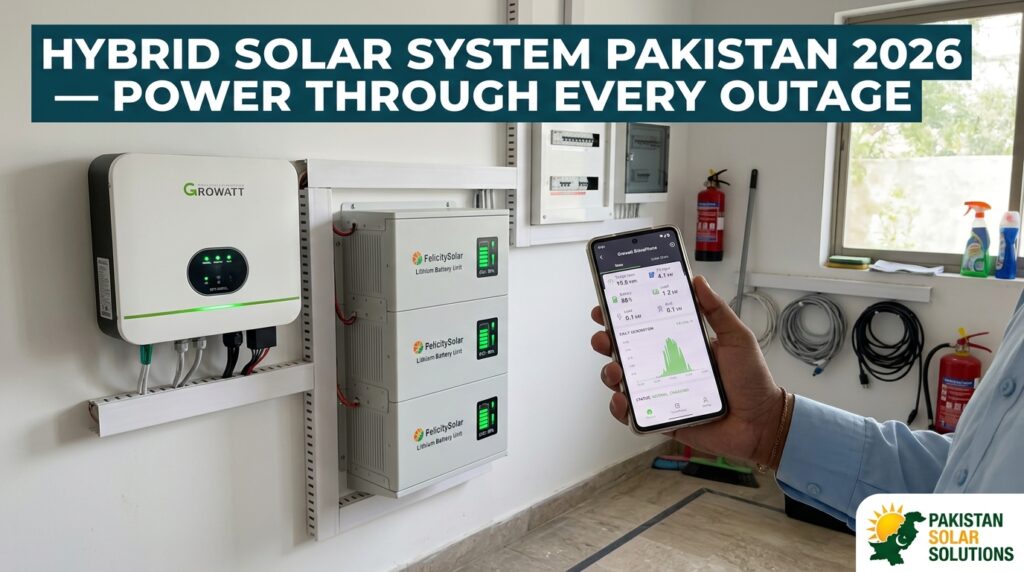
A hybrid solar system connects your solar panels to a hybrid inverter that manages three energy sources simultaneously. The first source is your solar panels generating DC electricity converted into AC power for your home. The second source is the lithium battery bank, which stores surplus solar energy for use during load shedding or at night. The third source is the national grid, which the system draws from when solar generation and battery reserves are both insufficient. The hybrid inverter prioritizes solar power first, then battery discharge, then grid import. When grid power is available and panels generate surplus energy, the system charges the battery and exports remaining surplus to the grid through NEPRA net metering. During load shedding, the system switches to battery and solar power within milliseconds, so most appliances do not notice the transition. Pakistan Solar Solutions designs hybrid systems for homes, businesses, hospitals, and industrial facilities across Karachi, Sukkur, and Rawalpindi.
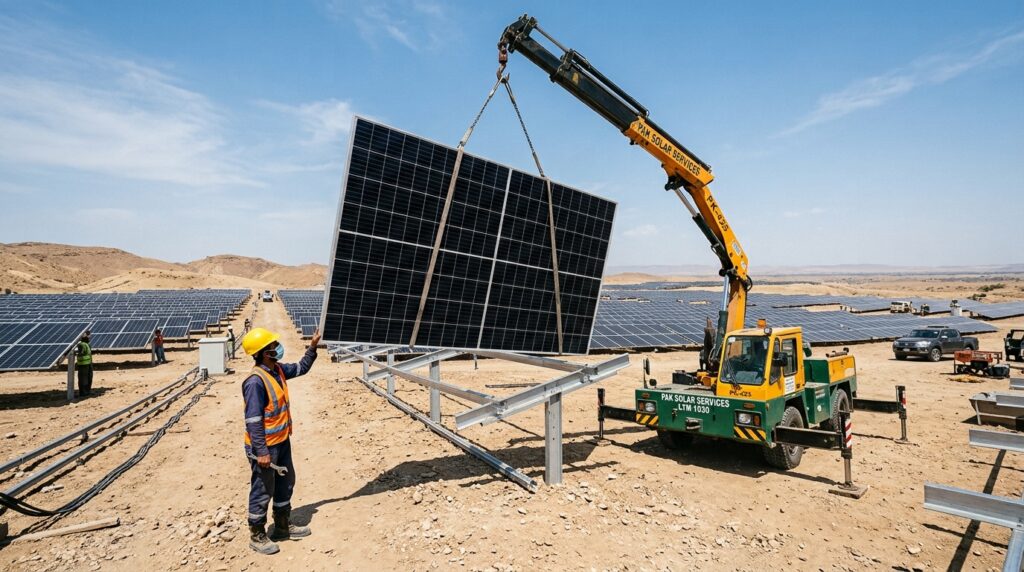
Hybrid solar system prices in Pakistan are higher than equivalent on-grid systems because of the additional cost of the hybrid inverter and lithium battery bank. A 5kW hybrid solar system with 5kWh to 10kWh of LiFePO4 lithium battery backup costs PKR 850,000 to PKR 1,100,000 as a complete turnkey installation in Pakistan in 2026. A 10kW hybrid system with 10kWh to 20kWh of battery capacity costs PKR 1,400,000 to PKR 1,700,000. A 20kW hybrid system for large homes or small commercial properties costs PKR 2,500,000 to PKR 3,200,000 depending on battery capacity and inverter brand. These prices include Tier-1 solar panels, a NEPRA-approved hybrid inverter, LiFePO4 battery bank, mounting structure, cabling, earthing, and professional installation. For reference, on-grid prices without battery backup are available in our guide on 5kW solar system price in Pakistan.
The battery bank is the component that differentiates a hybrid solar system from a basic on-grid installation. In 2026, LiFePO4 lithium iron phosphate batteries have become the clear standard for solar energy storage in Pakistan, replacing older lead-acid and AGM batteries. LiFePO4 batteries offer a 10-year manufacturer warranty and 3,000 to 6,000 charge cycles, compared to 500 to 800 cycles for lead-acid alternatives. This means a quality lithium battery bank installed in 2026 will remain functional for the first half of your solar panel’s 25-year lifespan. Lead-acid batteries typically require replacement every 3 to 5 years, adding significant hidden cost to systems that appear cheaper upfront. LiFePO4 batteries also charge faster, discharge more deeply without damage, operate safely at high temperatures relevant to Pakistan’s climate, and do not release harmful gases during charging.
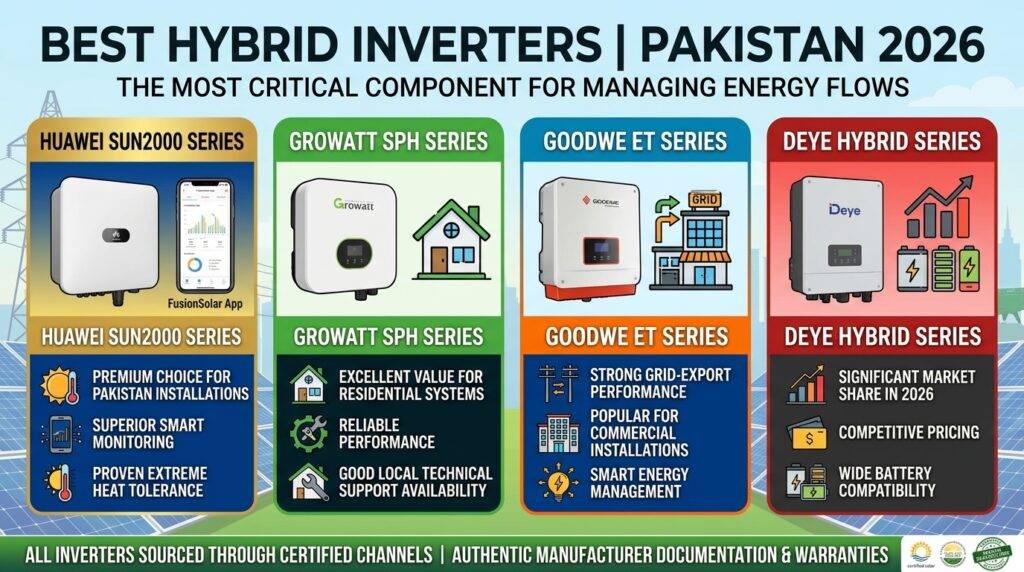
The hybrid inverter is the most critical component because it manages all energy flows between panels, batteries, the grid, and your loads. The Huawei SUN2000 series is the premium choice for Pakistani hybrid installations, offering superior smart monitoring through the FusionSolar mobile app and a proven track record in extreme heat conditions. The Growatt SPH series offers excellent value for residential hybrid systems with reliable performance and good local technical support availability in Pakistan. The GoodWe ET series combines hybrid capability with strong grid-export performance, making it popular for commercial installations. The Deye Hybrid series has gained significant market share in Pakistan in 2026 due to competitive pricing and wide battery compatibility. All inverters Pakistan Solar Solutions installs are sourced through certified channels with authentic manufacturer documentation and warranties.
Monthly savings from a hybrid system are slightly higher than on-grid because you consume more of your own solar generation at full tariff value instead of exporting it at the lower net metering rate. Additionally, avoiding generator fuel costs during load shedding adds significant hidden savings that are often overlooked in ROI calculations. A household spending PKR 8,000 to PKR 15,000 per month on generator fuel eliminates this cost entirely after hybrid solar installation. Over a 25-year lifespan, hybrid solar system owners in Pakistan can expect total savings of PKR 10 to 18 million depending on system size, tariff trajectory, and fuel cost trends.
The financial case for a hybrid system depends primarily on how many hours of load shedding your area experiences and what the economic cost of outages is to you. For households experiencing 4 to 6 hours of daily load shedding, the monthly value of uninterrupted power, including food preservation, air conditioning continuity, work from home productivity, and avoidance of appliance damage, often exceeds the additional monthly capital cost of the battery bank. For businesses including restaurants, clinics, offices, and retail shops, a single day of power-related downtime can cost more than a full monthly installment on a hybrid battery bank. For customers wanting to understand how hybrid installation is carried out in Karachi specifically, visit our solar installation Karachi page for the full EPC process.
An on-grid solar system connects only to the national grid and shuts down during load shedding. A hybrid solar system adds a lithium battery bank that stores surplus solar energy and powers your home or business during load shedding and at night. Hybrid systems cost more but provide 24/7 power independence from WAPDA and K-Electric outages.
Backup duration depends on battery capacity and your load. A 10kWh battery bank powering a typical Pakistani home with 2kW average consumption during outages provides 5 to 6 hours of backup. Pakistan Solar Solutions sizes battery banks to your specific outage duration and essential load profile during the free energy audit.
In some cases, yes. If your existing on-grid inverter is compatible with battery addition, a battery storage unit can be retrofitted. However, most standard on-grid inverters are not designed for hybrid conversion. Pakistan Solar Solutions can assess your existing system and advise whether an upgrade or full hybrid replacement offers better long-term value.
Yes. Quality LiFePO4 lithium batteries are available and installed by Pakistan Solar Solutions across Pakistan. We source branded battery systems with verified BMS protection circuits and 10-year warranties. Local availability has improved significantly in 2026 with several authorized importers stocking popular battery brands in Karachi and Lahore.
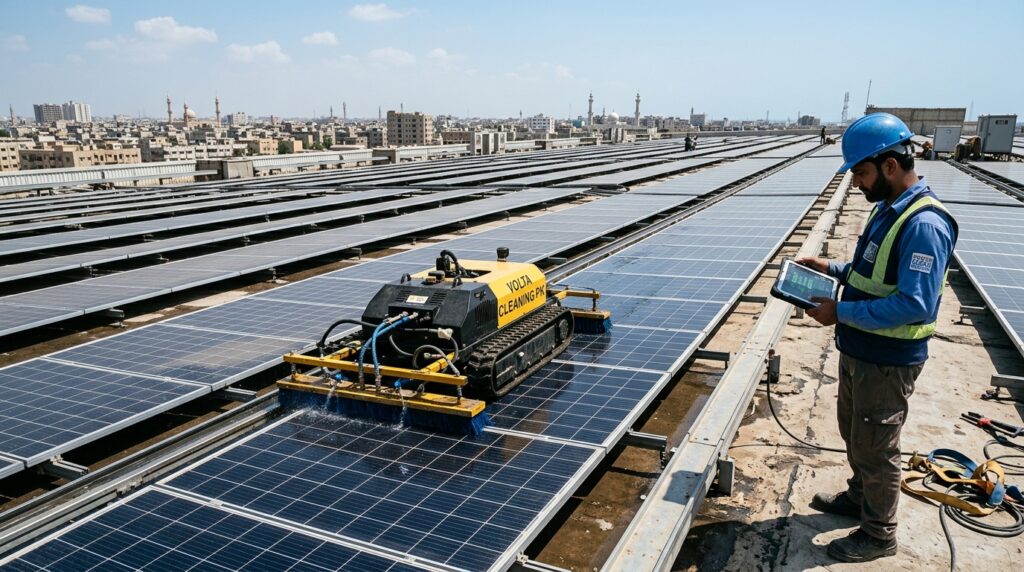
Hybrid solar systems require minimal maintenance. Solar panels should be cleaned every 4 to 8 weeks in dusty Pakistani conditions. The inverter and battery management system are self-monitoring and alert you via mobile app if attention is needed. Pakistan Solar Solutions offers annual maintenance packages that include panel cleaning, inverter inspection, battery health check, and system performance review.