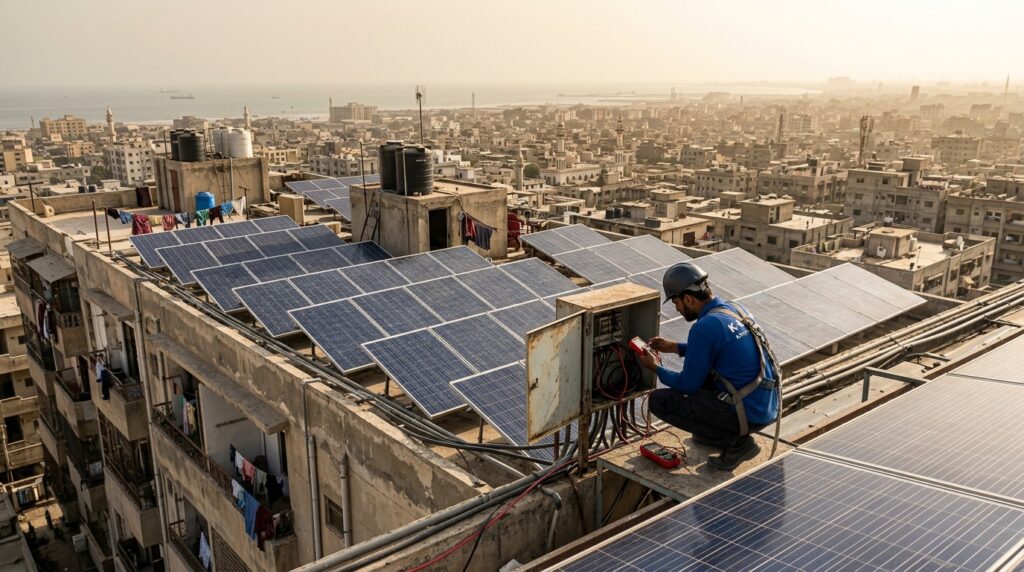


Karachi is Pakistan’s largest city and its biggest solar market by sheer volume, but it is also one of the most unique in terms of climate and grid conditions. Between K-Electric’s tariffs, the city’s coastal humidity, dense urban housing stock ranging from small apartments to large bungalows, and a growing industrial base across SITE and Korangi, the solar panel price in Karachi involves a slightly different set of considerations compared to inland cities like Lahore or Multan. This guide breaks down current 2026 pricing specific to Karachi, what the coastal environment means for panel selection and longevity, and how K-Electric’s net metering process works for local customers.
As Pakistan’s primary financial and commercial hub, Karachi has the highest concentration of both residential and commercial solar installations in the country. Pakistan Solar Solutions has been headquartered in Karachi since 2017, giving us a particularly deep understanding of how local housing types, K-Electric’s specific net metering procedures, and the city’s coastal climate all factor into system design and pricing for Karachi customers specifically.
Solar equipment pricing in Karachi generally tracks national averages, since the same Tier-1 importers and manufacturers supply panels across all major Pakistani cities, though Karachi’s status as a primary import hub can occasionally give it a slight logistical pricing advantage over inland cities.
Solar panels in Karachi currently range from PKR 24 to PKR 55 per watt depending on brand, wattage and cell technology. Standard P-Type and Mono PERC panels sit toward the lower end of this range, while premium N-Type bifacial panels from Longi, Jinko and similar Tier-1 manufacturers occupy the higher end, offering better performance during Karachi’s long, humid summer season.
A complete, professionally installed 5 kW on-grid system in Karachi typically costs between PKR 650,000 and PKR 850,000, with a 5 kW hybrid system including lithium battery backup ranging from PKR 850,000 to PKR 1,100,000. Larger 10 kW systems, common for bigger bungalows or small commercial properties, generally cost between PKR 950,000 for on-grid configurations and PKR 1,700,000 for fully equipped hybrid setups.
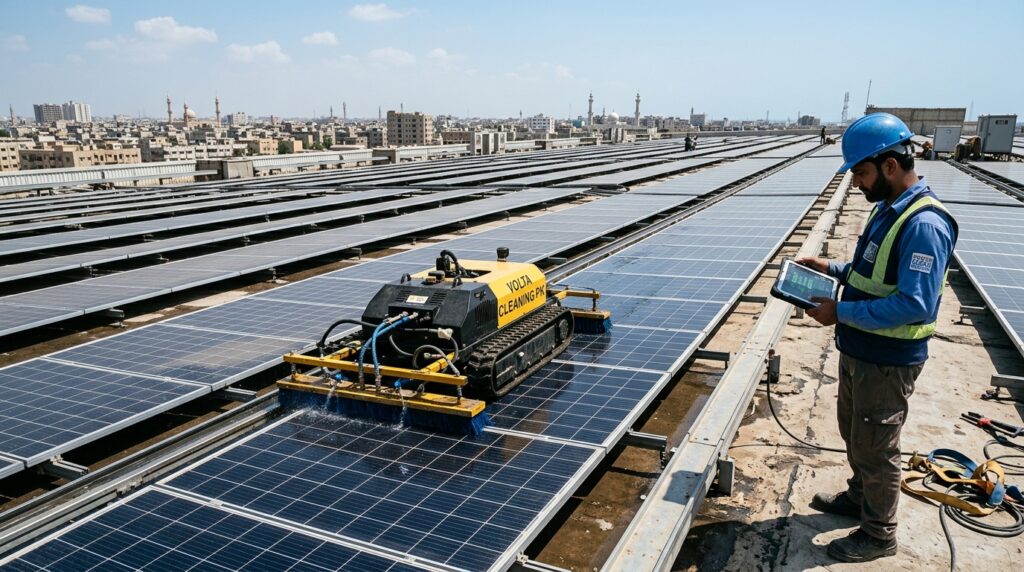
One question unique to Karachi buyers that rarely comes up in inland cities is whether the coastal environment, with its higher humidity and salt-laden air, affects solar panel longevity. Tier-1 panels installed by reputable companies use corrosion-resistant anodized aluminum frames and sealed junction boxes specifically designed to withstand humid and coastal conditions, meaning properly certified panels perform reliably in Karachi’s climate over their full 25-year warranty period. That said, coastal properties, particularly those close to the seafront in areas like Clifton or DHA, do tend to accumulate salt residue on panel surfaces somewhat faster than inland installations, making regular cleaning using a proper soft-bristle brush, covered in detail in our guide to the solar panel cleaning brush, particularly important for maintaining peak output in these areas.
Unlike most of Pakistan, which is served by WAPDA-affiliated DISCOs, Karachi is served by K-Electric, a separate vertically integrated utility with its own net metering procedures, though still regulated under the same NEPRA framework applied nationally. K-Electric customers need a minimum three-phase connection and a NEPRA-approved inverter to qualify, and the utility requires its own specific documentation and green meter installation process. Our net metering services handle the complete K-Electric application on behalf of Karachi customers, including load-flow diagrams and PEC-certified technical documentation, which is essential for first-time approval rather than facing delays common with incomplete or improperly prepared applications.
Karachi’s housing stock is notably diverse, ranging from smaller apartments in areas like Gulshan-e-Iqbal and Nazimabad to large independent bungalows across DHA and Clifton, and system design needs to reflect this variation. Apartment buildings often face rooftop space constraints and shared ownership considerations, making a carefully sized system using higher-efficiency panels, such as those covered in our guide to the best solar panels in Pakistan, particularly valuable for maximizing output within limited available space. Independent bungalows generally have more flexibility in system size and often benefit from a hybrid configuration given the value homeowners place on uninterrupted power through Karachi’s periodic load shedding, especially during peak summer demand.
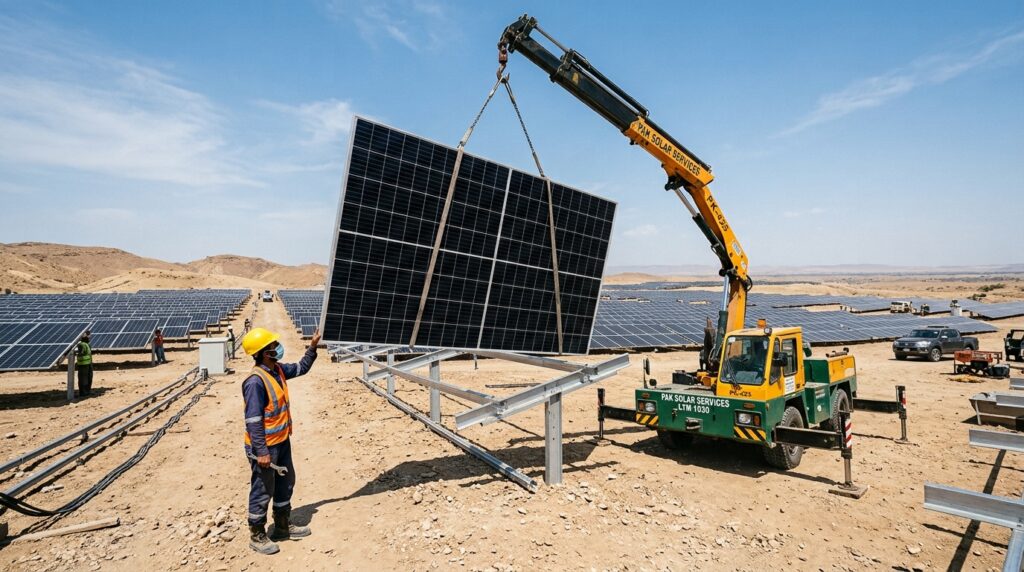
Karachi’s industrial base, spanning SITE, Korangi, Landhi and North Karachi, represents one of the largest concentrations of manufacturing activity in Pakistan, and solar adoption among factories and commercial units in these zones has accelerated significantly as K-Electric’s industrial tariffs have climbed. Our commercial and industrial solar solutions team has completed numerous large-scale projects across Karachi’s industrial areas, handling everything from feasibility studies to full NEPRA net metering documentation for facilities ranging from 50 kW to over a megawatt in capacity.
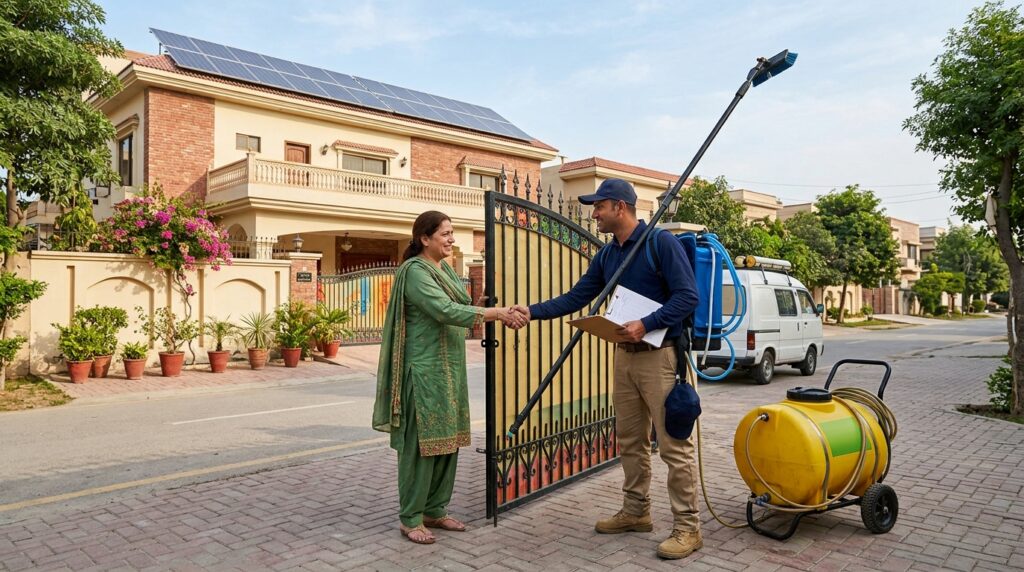
Karachi has the largest number of solar vendors and installers in Pakistan, which means buyers have plenty of choice but also face a wider range of quality and reliability among sellers than in smaller cities. Verifying that an installer is PEC-certified, uses genuine Tier-1 panels with manufacturer documentation, and has a demonstrable local track record matters significantly, particularly given how much variation exists in Karachi’s crowded solar market. Pakistan Solar Solutions has operated from our Karachi head office since 2017, and our solar panel price in Pakistan page reflects current market rates alongside our full range of residential, commercial and industrial services available to customers throughout the city.
As of 2026, solar panels in Karachi cost between PKR 24 and PKR 55 per watt, with a complete installed 5 kW on-grid system typically costing PKR 650,000 to PKR 850,000, depending on brand and system configuration.
Tier-1 panels with corrosion-resistant frames and sealed junction boxes perform reliably in Karachi’s humid, coastal climate over their full warranty period. Regular cleaning is recommended for properties closer to the seafront, where salt residue can accumulate somewhat faster than in inland areas.
Karachi is served by K-Electric rather than a WAPDA-affiliated DISCO, meaning net metering applications go through K-Electric’s own specific documentation and green meter process, though the underlying NEPRA regulatory framework remains the same as the rest of the country.
This depends on how frequently your specific area experiences load shedding. Neighborhoods with more stable K-Electric supply often do well with a lower-cost on-grid system, while areas with more frequent outages benefit from a hybrid system with battery backup for continuous power.
Look for a PEC-certified company with a demonstrable local track record, genuine Tier-1 equipment backed by manufacturer documentation, and a clear net metering application process with K-Electric. Pakistan Solar Solutions has been based in Karachi since 2017 and can be reached through our contact page for a free site survey.