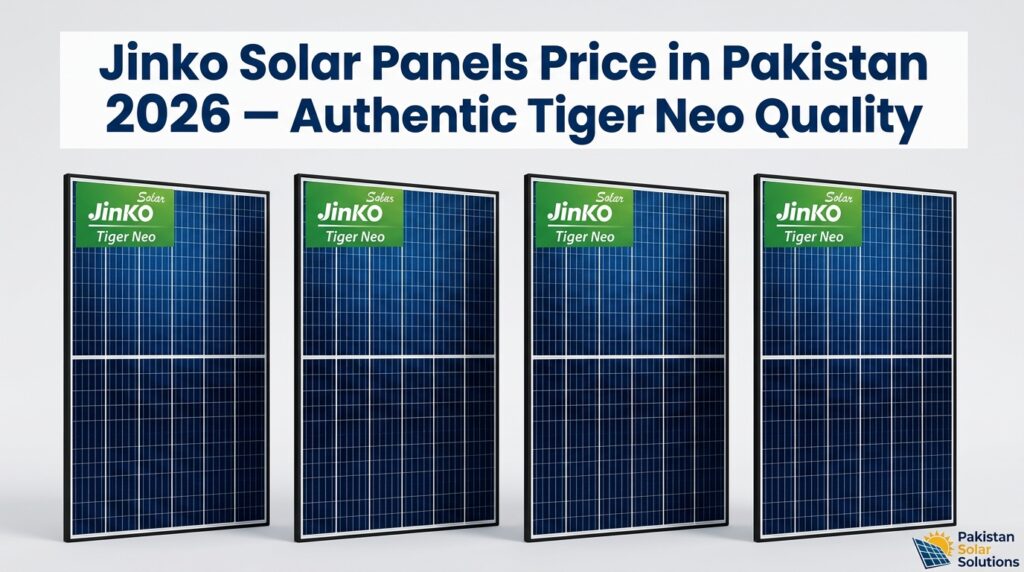


Jinko Solar is one of the two most installed solar panel brands in Pakistan in 2026, competing neck and neck with Longi Solar for the top position in the Pakistani residential and commercial market. As the world’s largest solar panel manufacturer by total shipped volume for multiple consecutive years, Jinko Solar brings unmatched economies of scale, rigorous quality control, and technology leadership to Pakistani buyers looking for Tier-1 panel performance at a competitive price. Understanding Jinko solar panels price in Pakistan equips you to evaluate quotes accurately and make a confident purchasing decision backed by solid technical knowledge.
This guide covers the complete Jinko solar panel price list for Pakistan in 2026, including Tiger Neo N-Type models, bifacial specifications, how Jinko panels perform in Pakistan’s extreme climate, a detailed comparison with competing Tier-1 brands, and how Pakistan Solar Solutions installs Jinko panels across residential, commercial, and agricultural applications nationwide. Whether you are installing a 5kW residential system in Karachi or a 500kW industrial system in Rawalpindi, Jinko Tiger Neo panels represent one of the strongest value propositions available in the Pakistani solar market today.
Jinko Solar, officially JinkoSolar Holding Co. Ltd., was founded in 2006 and is headquartered in Shanghai, China with manufacturing facilities across China, the United States, Malaysia, and Vietnam. It has held Bloomberg NEF Tier-1 status consistently for over a decade and is the manufacturer of choice for utility-scale, commercial, and residential solar projects across more than 160 countries. In Pakistan specifically, Jinko Tiger Neo panels have earned a reputation for consistent performance in high-temperature conditions, reliable long-term output, and wide availability through authorized distributor channels.
Jinko’s dominance in Pakistan’s market is driven by several factors beyond brand recognition alone. The Tiger Neo N-Type cell technology delivers measurably better performance in Pakistan’s extreme summer heat compared to older P-Type PERC panels from any brand. Jinko’s strong bifacial panel lineup generates additional electricity from light reflected off roof surfaces, increasing annual output by 5 to 15 percent compared to monofacial panels in Pakistani installation conditions. The combination of these technical advantages with a competitive price point makes Jinko Tiger Neo the panel of choice for Pakistani solar engineers who prioritize long-term energy yield over short-term cost minimization. For comparison with the other leading brand in Pakistan’s market, our Longi solar panels price Pakistan guide covers Hi-Mo X10 specifications and pricing in equivalent detail.
Jinko Solar offers several panel series in Pakistan’s market in 2026, each targeting different application requirements and budget levels. Understanding the differences between Jinko models helps you select the right panel for your system without paying for specifications that do not benefit your specific installation.
The Jinko Tiger Neo N-Type series is the current flagship product line from Jinko in 2026 and by far the most widely installed Jinko panel in Pakistan. Tiger Neo panels use N-Type monocrystalline silicon cells with Jinko’s proprietary multi-busbar and anti-reflective coating technology, delivering panel efficiencies of 22 to 23.9 percent in standard rectangular formats. Tiger Neo panels are available in wattages from 450W to 620W, with 550W to 580W formats being the most popular for residential and commercial Pakistani installations.
The Tiger Neo’s temperature coefficient of minus 0.29 to minus 0.30 percent per Kelvin is among the lowest available in mass-produced panels, which directly translates into better performance during Pakistan’s summer peak generation months when ambient temperatures reach 42 to 48 degrees Celsius in cities like Karachi, Sukkur, Multan, and Hyderabad. At these temperatures, a Tiger Neo panel generates 3 to 5 percent more electricity than an equivalent-wattage P-Type PERC panel from the same brand, a difference that accumulates to significant PKR value over a 25-year lifespan. In Pakistan in 2026, Jinko Tiger Neo N-Type panels in 550W to 580W formats are priced at approximately PKR 44,000 to PKR 58,000 per panel as part of a complete installation, representing per-watt pricing of PKR 80 to PKR 102 per watt.
The Jinko Tiger Neo Bifacial version adds rear-side glass to the standard Tiger Neo design, allowing the panel to generate electricity from both direct sunlight on the front surface and reflected light on the rear surface simultaneously. Bifacial gain in Pakistani installation conditions, where white-painted concrete roofs and light sandy ground surfaces reflect significant amounts of sunlight, typically ranges from 5 to 15 percent above the panel’s rated front-side output.
Bifacial Tiger Neo panels are particularly valuable for elevated-tilt mounting systems, ground-mount installations on agricultural land, and commercial rooftop systems where panels are raised on structures allowing light to reach the rear surface. For standard flush-mount residential rooftop installations where the panel sits close to a dark roof surface, bifacial gain is minimal and the additional cost of bifacial panels is not justified. Pakistan Solar Solutions recommends bifacial Tiger Neo panels where the installation geometry genuinely supports rear-side generation, not as a blanket upgrade for all project types.
In Pakistan in 2026, Jinko Tiger Neo Bifacial panels in 560W to 610W formats are priced at PKR 48,000 to PKR 62,000 per panel, representing per-watt pricing of PKR 82 to PKR 105 per watt.
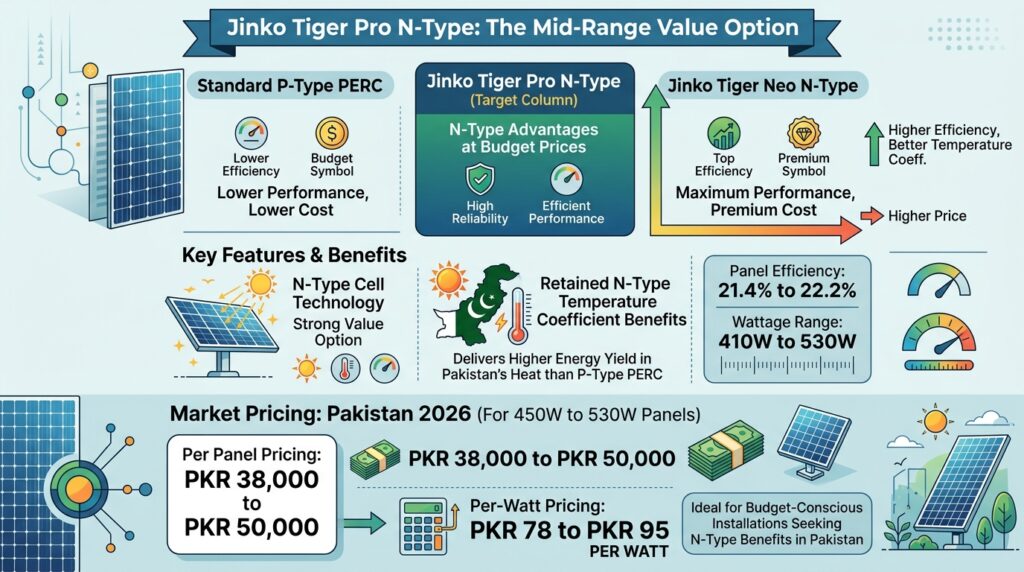
The Jinko Tiger Pro series uses N-Type cell technology at a slightly lower efficiency than Tiger Neo, delivering panel efficiencies of 21.4 to 22.2 percent at wattages from 410W to 530W. The Tiger Pro retains N-Type temperature coefficient benefits at a price point closer to standard P-Type PERC panels, making it a strong value option for budget-conscious installations where N-Type performance advantages in Pakistan’s heat are desired without the full Tiger Neo premium.
In Pakistan in 2026, Jinko Tiger Pro N-Type panels are priced at PKR 38,000 to PKR 50,000 per panel for 450W to 530W formats, representing per-watt pricing of PKR 78 to PKR 95 per watt.
Pakistani solar buyers and engineers frequently compare panels on a standardized per-watt basis to enable fair comparison across different wattages, brands, and models. The following per-watt price ranges reflect current 2026 market rates for genuine, authenticated Jinko panels purchased as part of a complete system installation from a certified installer like Pakistan Solar Solutions.
Jinko Tiger Pro N-Type panels are available at PKR 78 to PKR 95 per watt. Jinko Tiger Neo standard N-Type panels are available at PKR 80 to PKR 102 per watt. Jinko Tiger Neo Bifacial N-Type panels are available at PKR 82 to PKR 108 per watt. These per-watt rates are directly comparable to competing Tier-1 brands in Pakistan’s market. Longi Hi-Mo X10 ranges from PKR 90 to PKR 110 per watt and JA Solar N-Type TopCon ranges from PKR 82 to PKR 105 per watt. Jinko Tiger Neo sits at a competitive midpoint that explains its strong market share in Pakistan.
Pakistan’s solar generation environment is among the most demanding in the world for panel technology. Understanding how Jinko Tiger Neo panels specifically handle Pakistani climate conditions, including extreme heat, humidity, dust, and occasional cyclonic wind events in coastal areas, is essential for making a well-informed purchase decision.
Karachi and interior Sindh experience some of the highest solar panel operating temperatures in the world during May, June, and July. Roof surface temperatures during these months regularly reach 60 to 75 degrees Celsius, which is 35 to 50 degrees above the 25-degree standard test condition at which panel wattage ratings are measured. At these temperatures, a Jinko Tiger Neo panel with a temperature coefficient of minus 0.29 percent per Kelvin loses approximately 10.2 to 14.5 percent of its rated output due to thermal derating. An older P-Type PERC panel with minus 0.40 percent per Kelvin loses 14 to 20 percent of rated output under identical conditions. The difference is 3 to 6 percent more electricity from Tiger Neo during Pakistan’s peak generation months, which represents meaningful additional PKR value accumulated over 25 years.
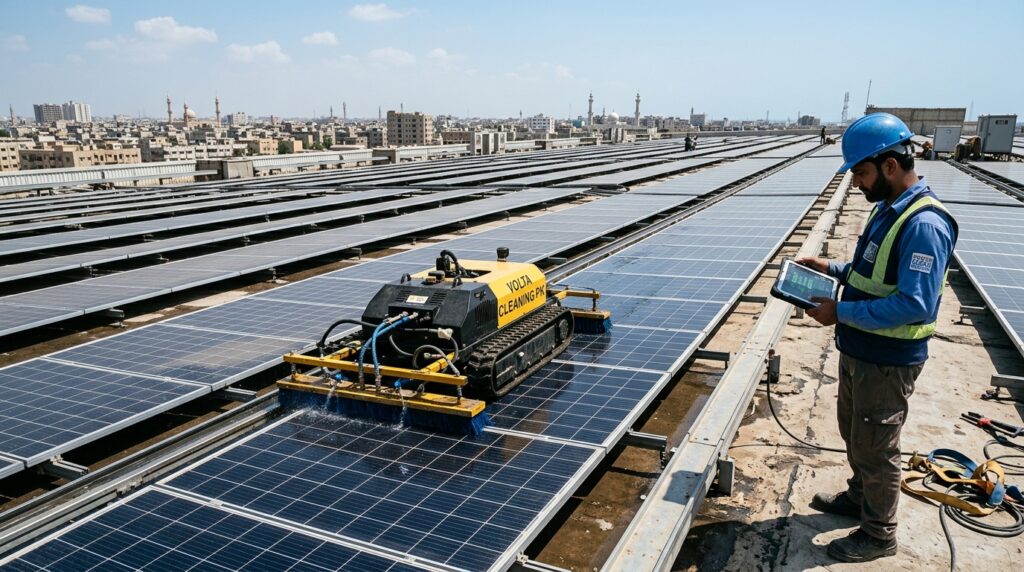
Pakistan’s environment, particularly in Sindh, Balochistan, and desert-adjacent Punjab areas, subjects solar panels to significant dust accumulation from wind-blown soil, construction activity, and periodic dust storms. Jinko Tiger Neo panels use an anti-reflective and anti-soiling surface coating that reduces the rate of dust adhesion and makes cleaning more effective. Pakistan Solar Solutions recommends panel cleaning every 4 to 6 weeks for Karachi and dusty interior locations to maintain peak output throughout the year.
Karachi’s coastal location means panels installed in the city are exposed to salt-laden sea air and occasional strong wind events associated with monsoon activity. Jinko Tiger Neo panels are tested to IEC 61215 and IEC 61701 standards covering mechanical load resistance and salt mist corrosion, making them suitable for Karachi’s coastal environment. Pakistan Solar Solutions uses appropriate coastal-grade mounting hardware and earthing specifications for all Karachi installations to complement the panel’s built-in environmental resistance.
Pakistani solar buyers frequently ask how Jinko compares to other Tier-1 brands available in the market. This is a reasonable question given that the difference in total system cost between brands can reach PKR 50,000 to PKR 150,000 on a 10kW system. The honest answer is that all four major Tier-1 brands deliver credible quality and meaningful performance warranties. The meaningful differences come down to specific N-Type cell architecture, per-watt pricing at the time of purchase, bifacial availability, and local supply chain reliability.
Jinko Tiger Neo and Longi Hi-Mo X10 are directly comparable in technology generation, efficiency range, and temperature coefficient. Both use N-Type cell technology with similar efficiency and warranty terms. In Pakistan’s 2026 market, Jinko Tiger Neo often prices slightly below Longi Hi-Mo X10 on a per-watt basis while delivering comparable performance, which explains why some engineers and buyers prefer Jinko for value-focused installations. JA Solar N-Type TopCon is also competitive in both price and efficiency and has gained market share in Pakistan in 2026. Canadian Solar HiKu7 uses P-Type mono PERC technology and offers a lower per-watt price with slightly lower temperature performance in Pakistan’s extreme heat. For a full residential system pricing comparison incorporating all these brands, our guides on solar panels price in Karachi and 5kW solar system price in Pakistan provide complete cost context.
Counterfeit solar panels are a documented problem in Pakistan’s market. Some informal traders sell panels with Jinko labels that contain lower-grade cells, producing significantly less power than their rated wattage. Verifying panel authenticity protects your investment and ensures the 25-year warranty is enforceable with the actual manufacturer.
Every genuine Jinko Tiger Neo panel carries a unique serial number on the back label that can be verified through Jinko’s official online verification portal. The panel back label should display certification marks from IEC, TUV, or UL. Your installer should provide a manufacturer invoice or procurement documentation from Jinko’s authorized Pakistani distributor showing the panel serial number ranges. Pakistan Solar Solutions sources all Jinko panels through Jinko’s official authorized distributor network in Pakistan and provides full manufacturer documentation, warranty cards in the client’s name, and verifiable serial numbers for every panel installed. We encourage clients to independently verify panel authenticity if they wish as part of our transparency commitment.
Pakistan Solar Solutions installs Jinko Tiger Neo panels across the full spectrum of solar applications in Pakistan, from small residential rooftops to large industrial facilities and agricultural solar pumping systems.
For residential installations of 3kW to 20kW in Pakistan’s major cities, Jinko Tiger Neo panels in 550W to 580W formats are an excellent choice for maximizing energy yield on limited roof space. Their high wattage per panel means fewer panels are needed to achieve the target system capacity, reducing roof loading and mounting hardware requirements. Pakistan Solar Solutions regularly specifies Jinko Tiger Neo for Karachi, Rawalpindi, and Sukkur residential projects where roof area is constrained.
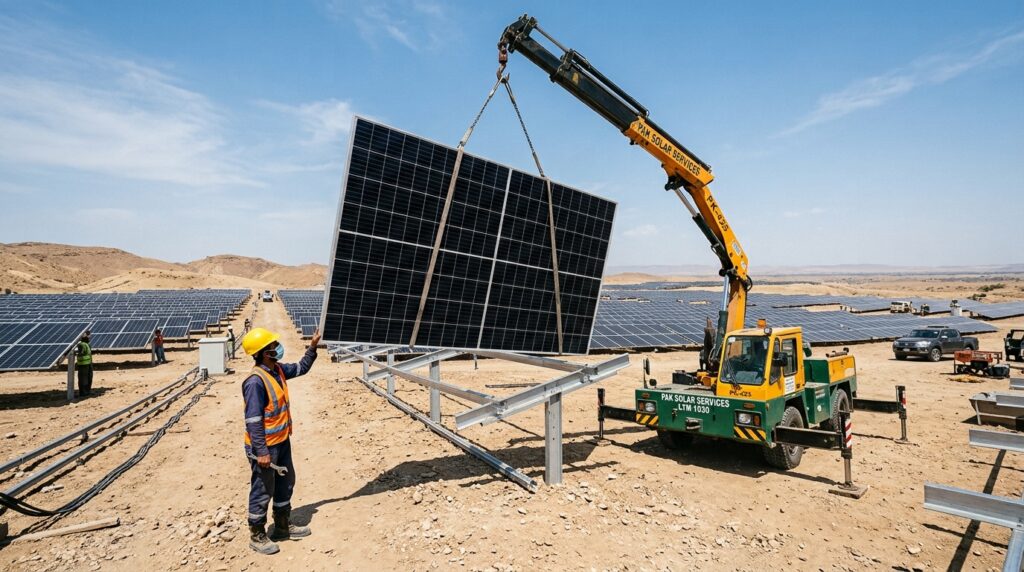
For large commercial and industrial projects from 50kW to 1MW, Jinko Tiger Neo bifacial panels in 580W to 620W formats deliver maximum energy per installation area. The combination of high wattage, bifacial gain, and N-Type temperature performance makes them the preferred panel for industrial clients where maximum annual energy generation per square metre of roof is the primary objective. Pakistan Solar Solutions has used Jinko Tiger Neo bifacial panels in multiple industrial installations in Karachi’s SITE and Korangi industrial zones.
Jinko Tiger Neo panels are also used in Pakistan Solar Solutions’ solar water pump installations across Sindh and Punjab. In agricultural applications, the N-Type temperature coefficient advantage is particularly valuable because peak pumping demand coincides with the hottest months of the year when temperature-related efficiency losses are greatest. For agricultural pumping system details and pricing, visit our solar water pump Pakistan guide.
In Pakistan in 2026, Jinko Tiger Neo N-Type panels in 550W to 580W formats cost PKR 44,000 to PKR 58,000 per panel as part of a complete installation. Jinko Tiger Neo Bifacial panels in 560W to 610W formats cost PKR 48,000 to PKR 62,000 per panel. Jinko Tiger Pro N-Type panels in 450W to 530W formats cost PKR 38,000 to PKR 50,000 per panel.
Jinko Tiger Neo N-Type panels are among the best choices for Karachi and other hot climate areas of Pakistan. Their temperature coefficient of minus 0.29 to minus 0.30 percent per Kelvin delivers measurably better performance than older P-Type PERC panels during summer months when roof temperatures exceed 60 degrees Celsius in Karachi, Sukkur, and Multan.
Ask your installer for the panel serial numbers and verify them on Jinko’s official verification portal. Request the manufacturer invoice from Jinko’s authorized Pakistani distributor. Check that the back label shows IEC or TUV certification marks. Pakistan Solar Solutions provides all of this documentation as standard with every Jinko installation.
Yes. Pakistan Solar Solutions installs Jinko Tiger Neo and Tiger Pro panels for residential, commercial, and industrial projects across Pakistan from our offices in Karachi, Sukkur, and Rawalpindi. Contact us at pakistansolar.solutions or call 0333-103-1086 for a free site survey and Jinko panel installation quote.
Jinko Tiger Neo panels carry a 25-year linear power output warranty guaranteeing at least 87.4 percent of original output at year 25, along with a 12-year product warranty covering manufacturing defects. These warranties are enforceable through Jinko’s authorized Pakistani distributor network and are backed by Jinko’s global warranty and claims process.