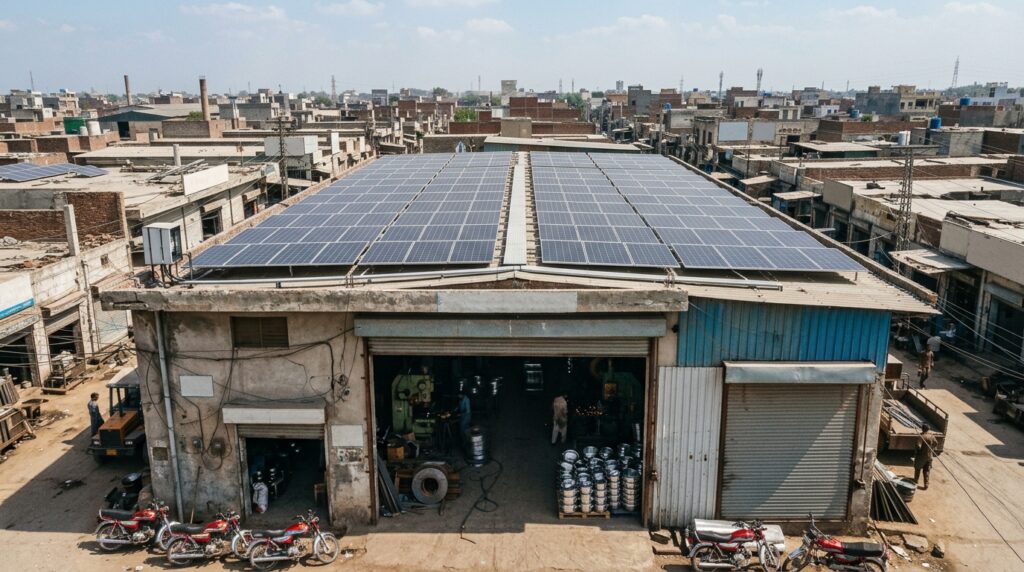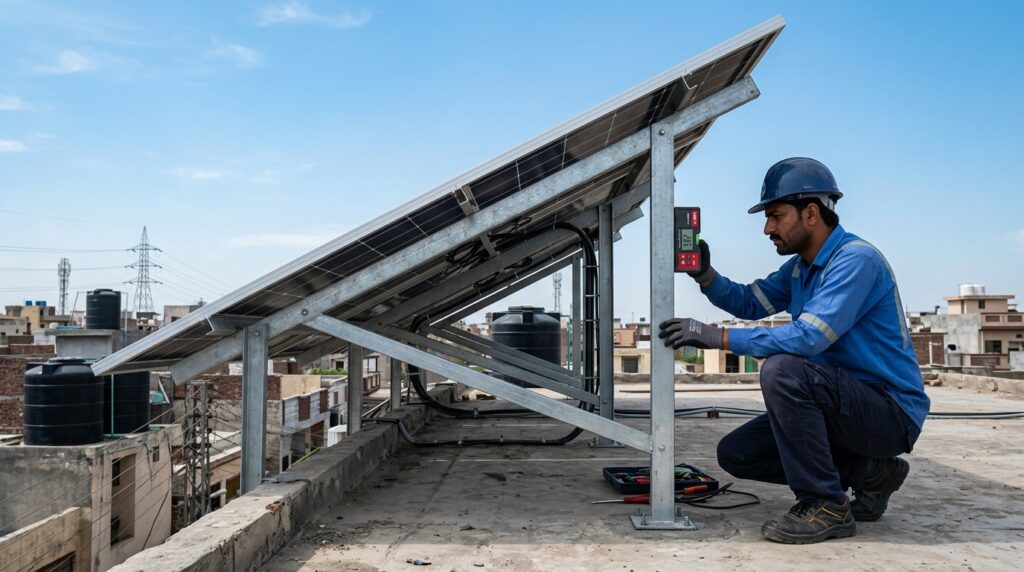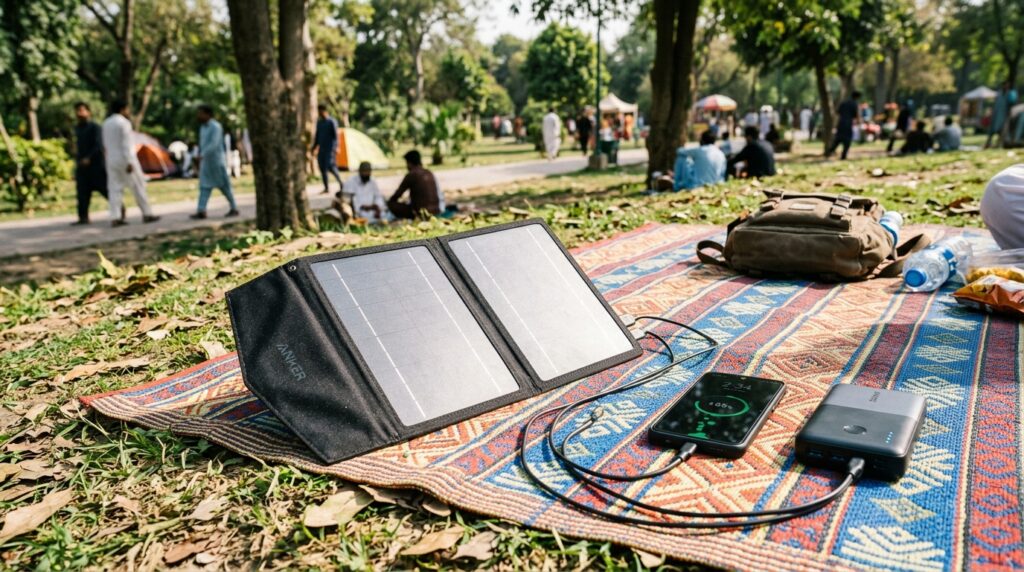
Pakistan’s solar energy market has grown at a breathtaking pace over the last five years. What was once a technology reserved for the wealthy elite has now become the primary solution for millions of middle-class Pakistani households trying to escape the dual burden of soaring electricity bills and relentless load shedding. Among the most searched topics in Pakistan’s solar market today is the 1000w solar panel price in Pakistan, and for good reason. A one kilowatt solar panel setup represents the entry point for serious solar investment, capable of powering essential home appliances and meaningfully reducing your monthly electricity bill.
But understanding the 1000w solar panel price in Pakistan is not as simple as looking up a single number. The price depends on the panel type, brand, efficiency rating, warranty terms, and where you purchase it. Add to this the cost of supporting equipment like inverters, batteries, mounting structures, and wiring, and the total picture becomes more complex. At Pakistan Solar Solutions, we believe every Pakistani consumer deserves complete, transparent, and honest information before making a solar investment. This comprehensive guide walks you through every dimension of the 1000w solar panel price in Pakistan so you can make the smartest possible decision.
Before diving into pricing, it is important to understand what 1000 watts means in the context of solar panels. A 1000w or one kilowatt solar panel system refers to the total peak power generation capacity of the panels installed. This does not mean the system generates one kilowatt of electricity every hour throughout the day. In reality, solar panels generate electricity based on the intensity of sunlight, which varies throughout the day.
In Pakistan, the average peak sun hours range from four to six hours per day depending on location and season. This means a 1000w solar panel system in Pakistan generates approximately four to six kilowatt-hours of electricity per day under optimal conditions. Over a full month, this translates to one hundred and twenty to one hundred and eighty units of electricity, which is enough to power a basic household’s lighting, fans, a small refrigerator, and a television throughout the day.
The 1000w capacity is typically achieved using either one very large panel if you are looking at an older bifacial design or, more commonly, two to three modern high-efficiency panels of three hundred and fifty to five hundred watts each. Today’s most popular solar panels in Pakistan are in the four hundred to five hundred watt range per panel, meaning a 1000w system requires just two to three panels.
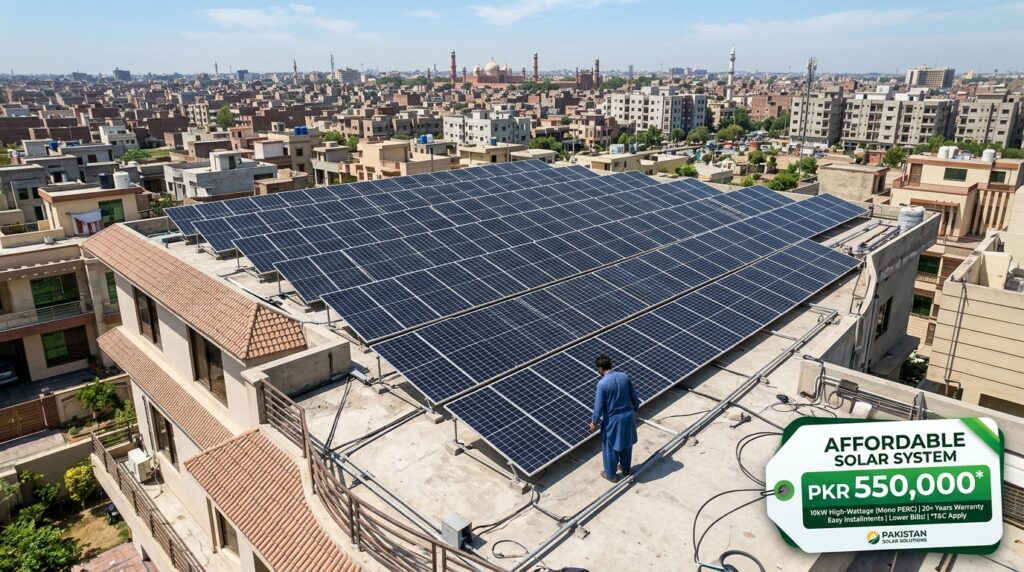
The 1000w solar panel price in Pakistan in 2025 ranges from approximately twenty-five thousand to seventy thousand rupees for the panels alone, depending heavily on the technology type, brand, and efficiency rating. This wide range exists because the solar panel market in Pakistan includes products from budget Chinese manufacturers at the lower end all the way to premium international brands with twenty-five-year performance guarantees at the higher end.
For monocrystalline solar panels, which are the most commonly installed type in Pakistan today due to their high efficiency and compact size, the 1000w solar panel price in Pakistan sits between thirty-five thousand and sixty thousand rupees. For polycrystalline panels, which are slightly less efficient but more affordable, prices range from twenty-five thousand to forty thousand rupees for one kilowatt capacity. Bifacial monocrystalline panels, which generate electricity from both sides and are increasingly popular for commercial installations, command a premium and typically start from fifty thousand rupees for a 1000w equivalent capacity.
It is critical to note that these prices are for panels only. The complete 1000w solar system price in Pakistan, including a solar inverter, batteries if required, mounting structure, DC and AC wiring, and installation labour, ranges from one hundred thousand to two hundred and fifty thousand rupees depending on whether you opt for an on-grid, off-grid, or hybrid setup.
For the most current and verified pricing, visit Pakistan Solar Solutions where we maintain up-to-date price lists for all major solar panel brands available in Pakistan.
The choice between monocrystalline and polycrystalline solar panels is one of the most debated topics among Pakistani solar buyers, and the answer depends on your specific priorities and rooftop space.
Monocrystalline panels are made from a single continuous crystal structure of silicon, giving them an efficiency rating of nineteen to twenty-three percent for premium models. This means they generate more electricity from a smaller surface area, which is valuable in Pakistan where rooftop space is often limited. They also perform better in high-temperature conditions, which is a significant advantage given Pakistan’s scorching summers. In hot weather above twenty-five degrees Celsius, all solar panels experience some output reduction, a phenomenon called temperature coefficient loss, but monocrystalline panels handle heat better than polycrystalline panels.
Polycrystalline panels are made from multiple silicon crystals melted together, resulting in slightly lower efficiency of fifteen to seventeen percent. They are cheaper to manufacture and therefore cheaper to buy, making them attractive for buyers focused purely on lowest upfront cost. However, because they are less efficient, you need more panels and more rooftop space to achieve the same 1000w capacity, which often negates the cost saving when mounting and wiring expenses are factored in.
For most Pakistani households where rooftop space is at a moderate premium and long-term performance matters, monocrystalline panels offer better overall value despite the higher upfront 1000w solar panel price in Pakistan. At Pakistan Solar Solutions, we can help you calculate the exact space requirements and long-term savings difference between both panel types for your specific situation.
The Pakistani solar market is served by dozens of brands, and quality varies enormously. Knowing which brands offer reliable performance and genuine warranties is essential before committing to a purchase based on the 1000w solar panel price in Pakistan alone.
JA Solar is one of the most widely installed brands in Pakistan. Their monocrystalline panels offer excellent efficiency and come with a twenty-five year performance warranty. A 1000w equivalent capacity using JA Solar four-hundred-fifty-watt panels typically costs between forty thousand and fifty-five thousand rupees for the panels.
Longi Solar is globally recognized as a leading manufacturer and is extremely popular in Pakistan’s commercial and residential solar market. Their Hi-MO series panels deliver outstanding performance in high-temperature conditions and their 1000w price in Pakistan is comparable to JA Solar.
Canadian Solar panels are premium offerings with a long track record of performance. They cost slightly more than JA Solar or Longi but offer industry-leading warranties and consistent quality. Their 1000w panel price in Pakistan ranges from fifty thousand to sixty-five thousand rupees.
Jinko Solar is another major international brand with a strong presence in Pakistan. Their Tiger series panels are among the most efficient widely available panels and their pricing is competitive with JA Solar and Longi.
Local and budget Chinese brands offer 1000w panel packages starting from twenty-five thousand rupees, but quality control and warranty support are often unreliable. At Pakistan Solar Solutions, we strongly recommend sticking to established international brands for a long-term investment of this nature.
Understanding the electricity generation capacity of a 1000w solar panel system helps you evaluate whether it justifies the 1000w solar panel price in Pakistan for your specific household needs.
In Karachi, which receives some of the highest solar irradiance in Pakistan with average peak sun hours of five point five to six per day throughout the year, a 1000w solar system generates approximately five to six kilowatt-hours or units daily. In Lahore, which has slightly lower irradiance and more smog days, the daily generation averages four to five units. In Islamabad and the northern regions, daily generation is around four to four and a half units during most of the year but drops in winter.
Over a full year, a 1000w solar system in Pakistan generates between one thousand four hundred and two thousand units of electricity depending on location. At a current electricity tariff of fifty-five to seventy rupees per unit in Pakistan, this represents a saving of seventy-seven thousand to one hundred and forty thousand rupees per year. Even at the higher end of the 1000w solar panel price in Pakistan, the system pays for itself within two to three years through electricity savings alone.
For Pakistani homes spending more than five thousand rupees per month on electricity bills, even a 1000w entry-level solar system makes strong financial sense, and upgrading to a larger system further accelerates the savings.
To give you a realistic picture of the total investment, here is a complete cost breakdown for a 1000w solar system in Pakistan beyond just the 1000w solar panel price in Pakistan.
The solar panels themselves for a 1000w monocrystalline system from a reputable brand cost between thirty-five thousand and fifty-five thousand rupees. A solar inverter of one kilowatt capacity, either on-grid or hybrid, adds fifteen thousand to forty-five thousand rupees depending on the type. A mounting structure for rooftop installation costs five thousand to fifteen thousand rupees. DC and AC cabling, fuses, and circuit breakers add another five thousand to ten thousand rupees. Professional installation labour ranges from eight thousand to twenty thousand rupees depending on your city and roof complexity.
If you want battery backup, a one hundred ampere-hour twelve volt lead-acid battery adds fifteen thousand to twenty-five thousand rupees, while a lithium-ion alternative of comparable storage capacity costs forty thousand to eighty thousand rupees. A complete 1000w hybrid solar system with lithium battery backup therefore ranges from one hundred and twenty thousand to two hundred and thirty thousand rupees installed.
For a detailed quotation tailored to your home’s specific requirements, contact Pakistan Solar Solutions and our team will assess your load, rooftop, and budget to recommend the most cost-effective configuration.
The Pakistani government’s policies have a direct impact on the 1000w solar panel price in Pakistan that end consumers pay. In recent years, solar panel imports have been subject to varying levels of customs duty and sales tax, which significantly affects retail prices.
Under previous policy frameworks, solar panels were largely exempt from customs duties as a clean energy promotion measure. However, recent budget adjustments have introduced additional taxes on some solar equipment categories, contributing to price increases in the market. The net metering policy by NEPRA continues to support solar adoption by allowing homeowners to sell surplus electricity back to the grid, improving the return on investment for solar buyers.
Keeping track of these policy changes is important for timing your solar purchase. Our team at Pakistan Solar Solutions monitors these developments closely and can advise you on the best time to buy based on current market conditions and government policy status.
Purchasing the right panels at the best 1000w solar panel price in Pakistan is only the beginning. Proper maintenance ensures your system performs at its rated capacity throughout its twenty-five-year lifespan. The most important maintenance task is regular solar plate cleaning, which we cover in complete detail in our solar plate cleaning guide at Pakistan Solar Solutions.
In Pakistan’s dusty environment, solar panels should be cleaned every ten to fourteen days in highly polluted areas and at least monthly in cleaner environments. Using the correct solar panel cleaning brush, which we discuss extensively in our solar panel cleaning brush article at Pakistan Solar Solutions, prevents surface scratches and maintains peak output. A well-maintained 1000w solar system continues generating its rated output throughout its lifespan, while a neglected system may see permanent efficiency degradation within five to eight years.
Many Pakistani homeowners start with a 1000w solar system as a trial investment and then expand once they see the electricity savings and system reliability firsthand. If you are planning to expand in the future, it is worth spending a little more upfront to future-proof your system.
Choosing a hybrid solar inverter with capacity beyond your current 1000w system allows you to add more panels later without replacing the inverter. Selecting a mounting structure designed for expansion makes adding panels straightforward. Investing in a lithium-ion battery system, as detailed in our lithium ion solar battery guide at Pakistan Solar Solutions, is also worthwhile for expandability since lithium batteries can be connected in parallel to increase storage capacity easily.
What is the current 1000w solar panel price in Pakistan including installation? A complete 1000w solar system in Pakistan including monocrystalline panels from a reputable brand, inverter, mounting, wiring, and installation typically costs between one hundred thousand and two hundred thousand rupees depending on whether you choose an on-grid, off-grid, or hybrid configuration.
Can a 1000w solar system run an air conditioner in Pakistan? A 1000w system alone is generally insufficient to run an air conditioner continuously, as even a one ton DC inverter AC consumes seven hundred to one thousand watts, leaving little margin for other appliances. For AC operation, a three to five kilowatt system is recommended. See our solar panels for AC units guide for full details.
How many solar panels are in a 1000w system? Most modern 1000w solar systems in Pakistan use two to three high-efficiency panels of three hundred and fifty to five hundred watts each, depending on the panel model selected.
How long do solar panels last in Pakistan’s climate? Quality solar panels from established brands last twenty-five to thirty years in Pakistan’s climate. However, output degrades slightly over time, typically by zero point five percent per year, so a panel generating one thousand watts today will generate around eight hundred and seventy-five watts after twenty-five years.
Is a 1000w solar system enough for a Pakistani household? A 1000w system is suitable for a small household with basic loads including LED lights, ceiling fans, a small refrigerator, and a television. For a medium-sized family home with a washing machine, water pump, and air conditioning, a three to ten kilowatt system is more appropriate.
Where can I get the best 1000w solar panel price in Pakistan? Pakistan Solar Solutions offers competitive pricing on quality solar panels from trusted brands. Visit pakistansolar.solutions for current pricing and personalised recommendations.